
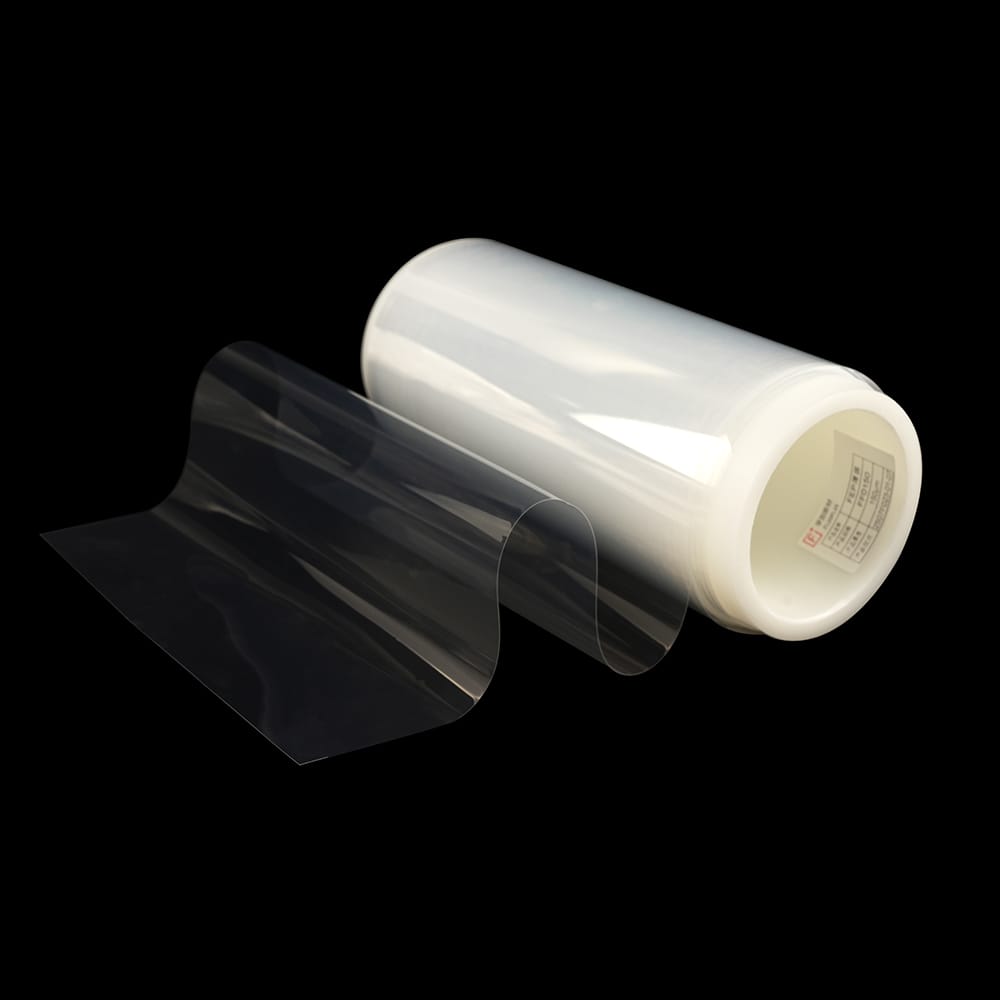
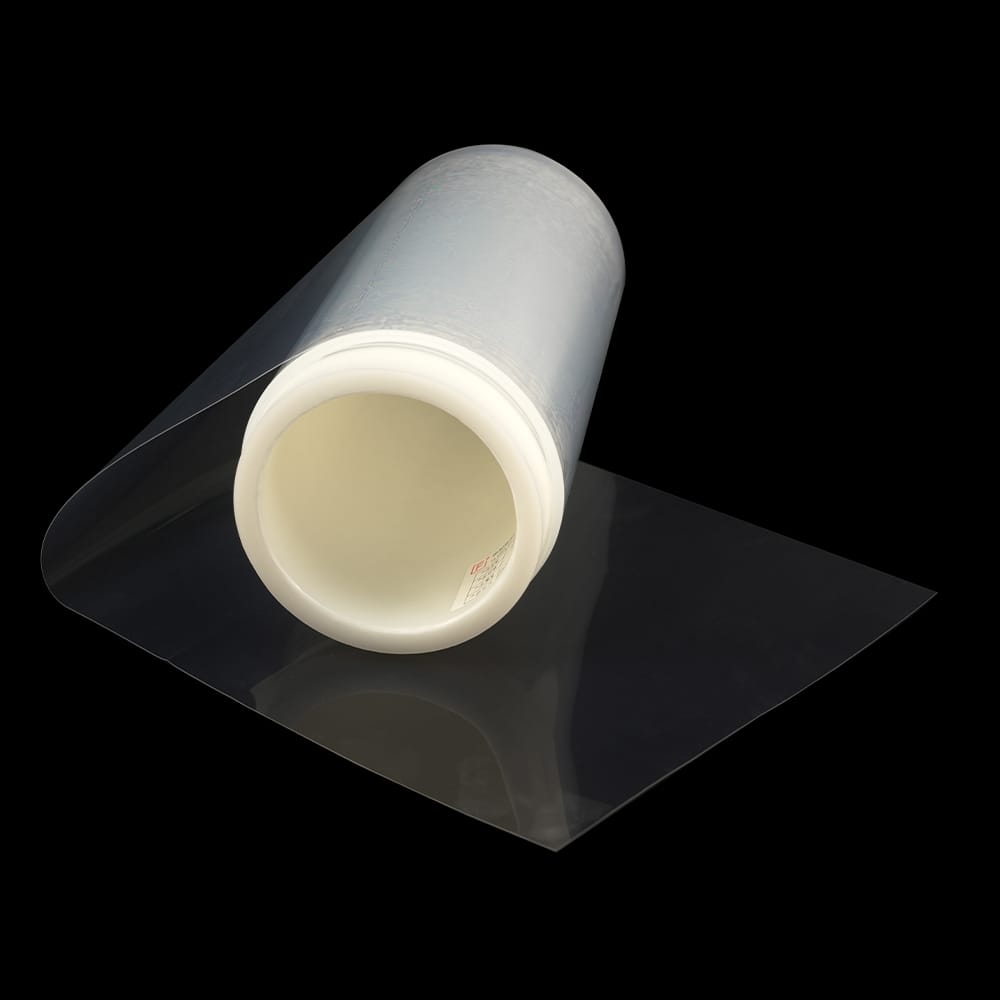
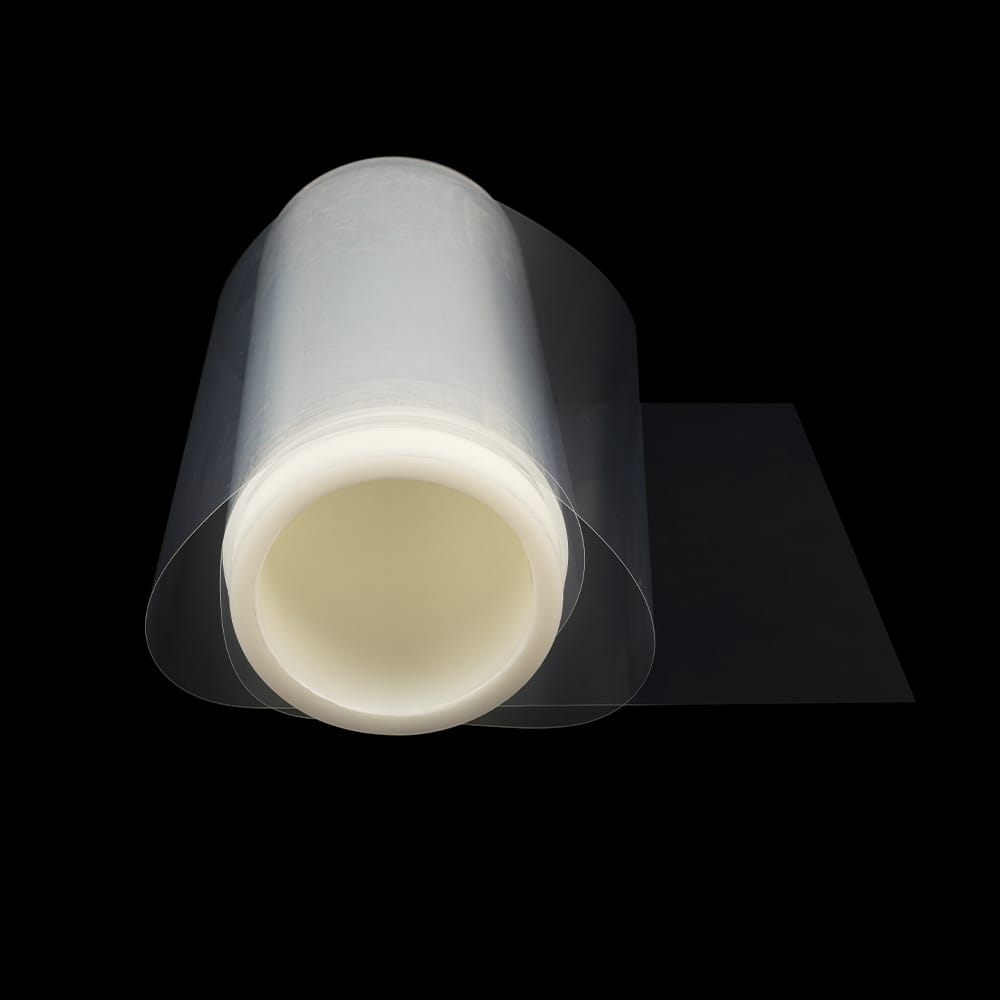
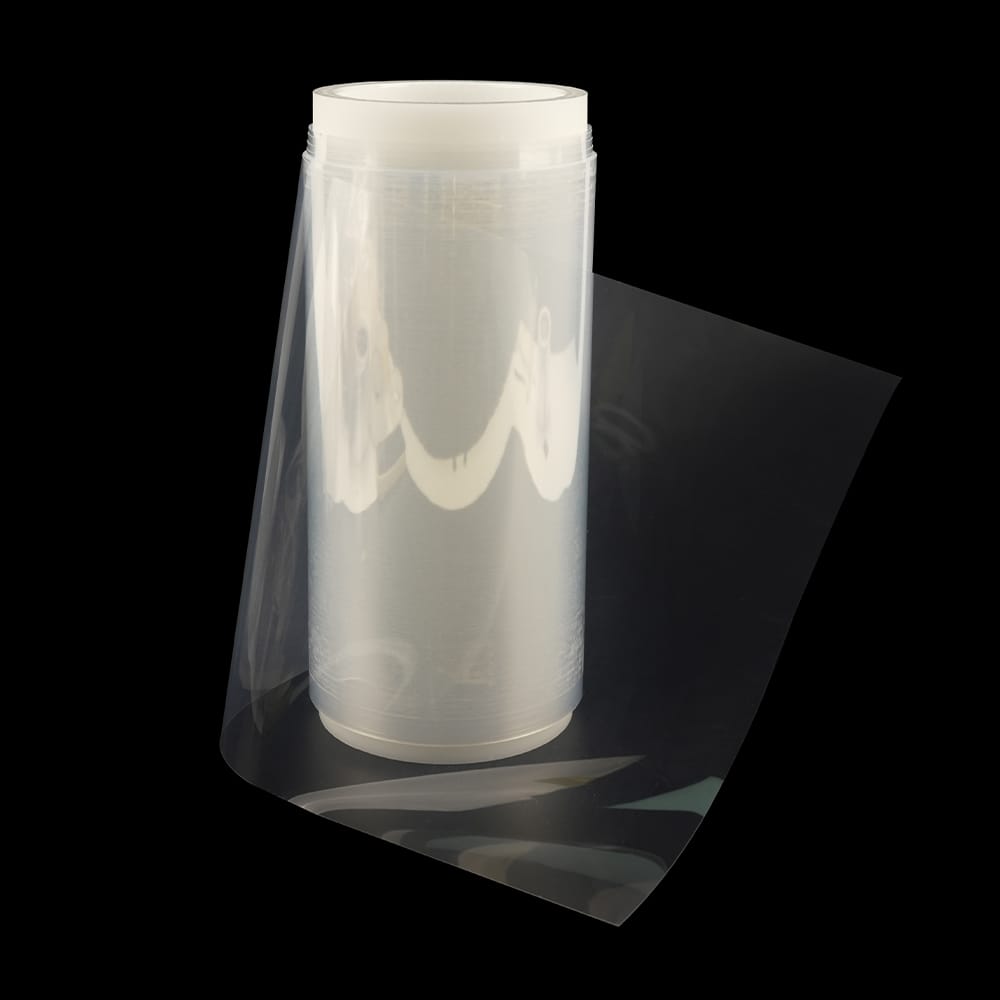
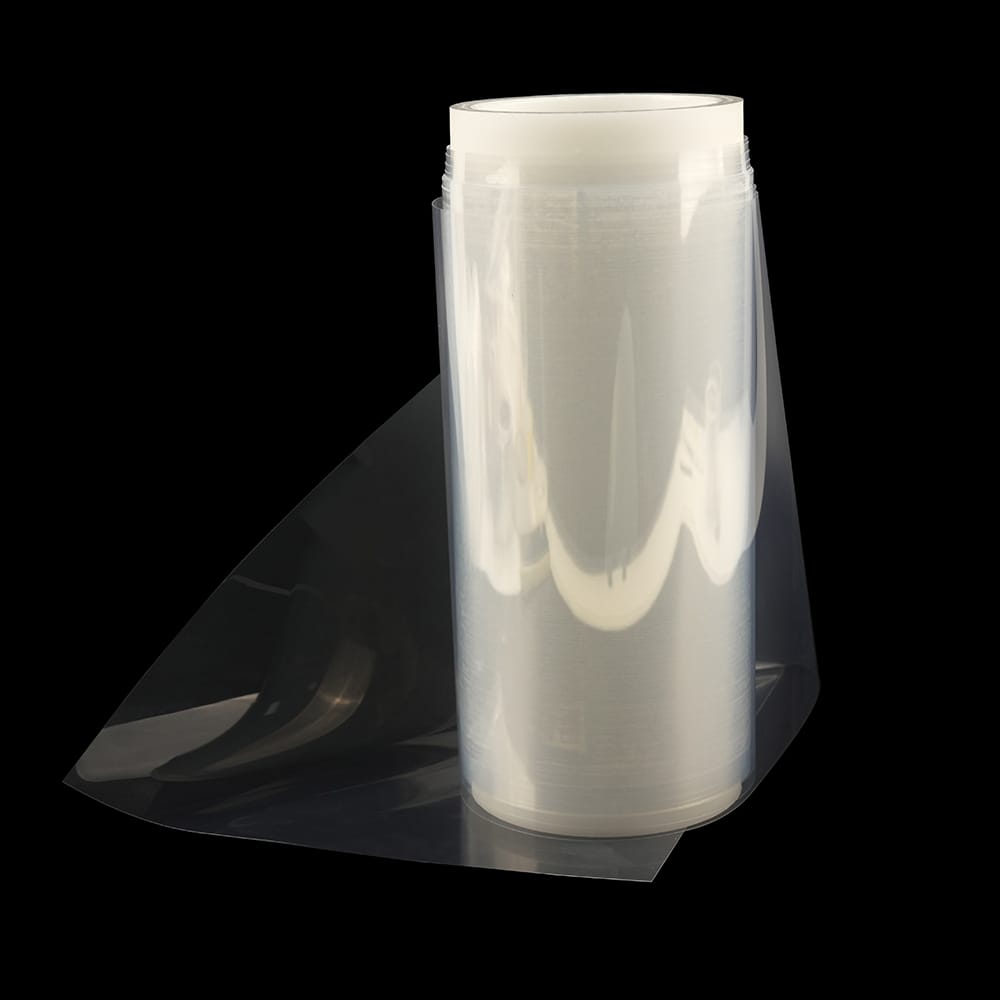
Technical Advantage: Why FEP Outperforms Standard Polymers
Unlike PET or PI films, FEP is virtually inert. It doesn’t just resist chemicals; it repels almost everything. Its low refractive index and high UV transmission make it the standard for high-definition 3D resin printing and solar encapsulation.
| Test items | Typical value | Unit | Test method | ||
| Material | FEP | – | – | ||
| Total thickness | 25~150 | μm | – | ||
| Specific Gravity | 2.12~2.17 | – | ASTM D1505 | ||
| Refractive index | 1.345 | – | ASTM D542 | ||
| Light transmittance | 96 | % | ASTM E424 | ||
| Moisture Absorption Rate | <0.01 | % | – | ||
| Fracture Strength | 22 | Mpa | ASTM D882 | ||
| Elongation at break | 300 | % | ASTM D882 | ||
| MIT bending cycles | 100,000 | cycles | ASTM D2176 | ||
| Melting point | 270 | ℃ | ASTM D3418 | ||
| Long-term use temperature | 205 | ℃ | UL-746B | ||
| Heat shrinkage rate (150°C × 10 min) | ±2 | % | ASTM D3595-97 | ||
| Flame retardancy | VTM-0 | – | UL-94 | ||
| Limiting Oxygen Index | 95 | VoI% | ASTM D2863 | ||
| Dielectric strength | 0.025mm film | 250 | kV/mm | ASTM D149 | |
| 1mm film | 35 | ||||
| Dielectric constant | 1MHz | 2.03 | – | ASTM D150 | |
| 1000MHz | 2.01 | ||||
| Dielectric loss | 1MHz | 0.0003 | – | ASTM D150 | |
| 1000MHz | 0.0005 | ||||
| Volume Resistivity | >1.0*1018 | ohm.cm | ASTM D257 | ||
| Surface resistivity | >1.0*1016 | ohm/sq | ASTM D257 | ||
Critical Engineering Features
Exceptional Release Properties: FEP’s molecular structure provides a permanent non-stick surface. This is critical for Composite Mold Release, ensuring that complex carbon fiber parts detach cleanly without surface damage.
Optical Purity for 3D Printing: Specifically calibrated for SLA, DLP, and LCD 3D printers. Our film ensures maximum UV light pass-through (up to 97%) for faster curing times and higher print resolution.
Low Dielectric Constant: A premier choice for high-frequency electrical insulation and flexible printed circuits (FPC), where signal loss must be minimized.
Cryogenic to High-Heat Stability: Maintains flexibility at -200°C and remains structurally sound at +200°C, a range that few other transparent films can match.
High-Growth Application Scenarios
3D Printing (NFEP/FEP V2): High-tensile FEP sheets for resin vats, designed to endure thousands of peel cycles without clouding or tearing.
Chemical Tank & Valve Linings: Acts as a corrosion-proof barrier for aggressive chemical storage and pharmaceutical processing.
Laboratory Labware Protection: Used as a non-contaminating, easy-to-clean covering for sensitive diagnostic equipment.
Aerospace & Wind Energy: Essential release film for the vacuum infusion of large composite blades and fuselage sections.
Customization & OEM Precision
We provide FEP solutions engineered to your specific tolerances:
Ultra-Thin to Heavy Duty: From 25μm (0.001″) for electronics to 500μm (0.020″) for heavy industrial linings.
Surface Functionalization: Optional C-Treatment (Corona) on one side for applications requiring bonding to other substrates.
Custom Slitting: Precision width cutting starting from 10mm up to 1250mm.
Cleanroom Packaging: Double-bagging available for medical and semiconductor applications to ensure zero dust contamination.
FAQ
Q: Is FEP film better than PTFE for 3D printing?
A: Yes. While PTFE is non-stick, it is opaque. FEP is transparent, allowing the UV light from the 3D printer’s screen to pass through and cure the resin accurately.
Q: Can FEP film be heat-sealed?
A: Yes. Unlike PTFE, FEP is a true thermoplastic. It can be heat-sealed, thermoformed, or vacuum-bonded to other materials, making it ideal for creating leak-proof bags or linings.
Q: Does the film lose its non-stick property over time?
A: No. The non-stick nature is a bulk property of the FEP fluoropolymer itself, not a surface coating. It will remain non-stick as long as the film is physically intact.
Reviews
There are no reviews yet.