
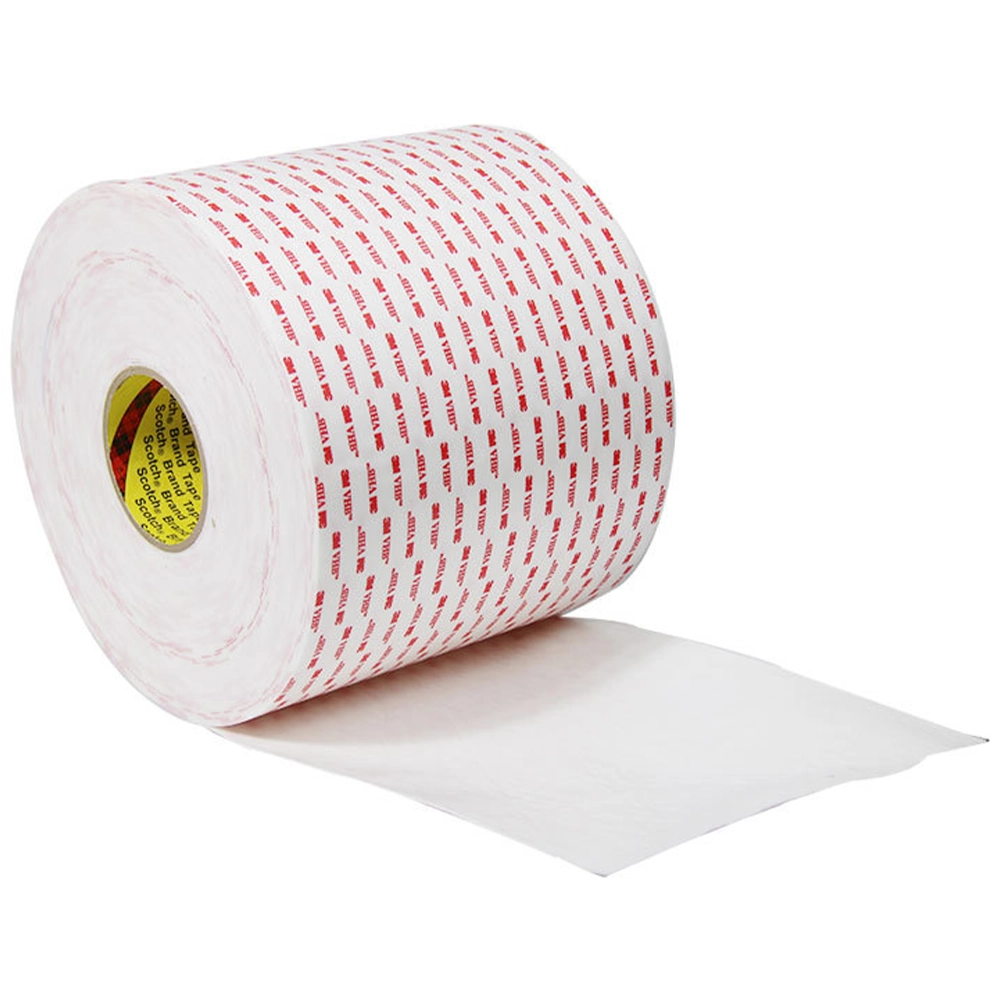
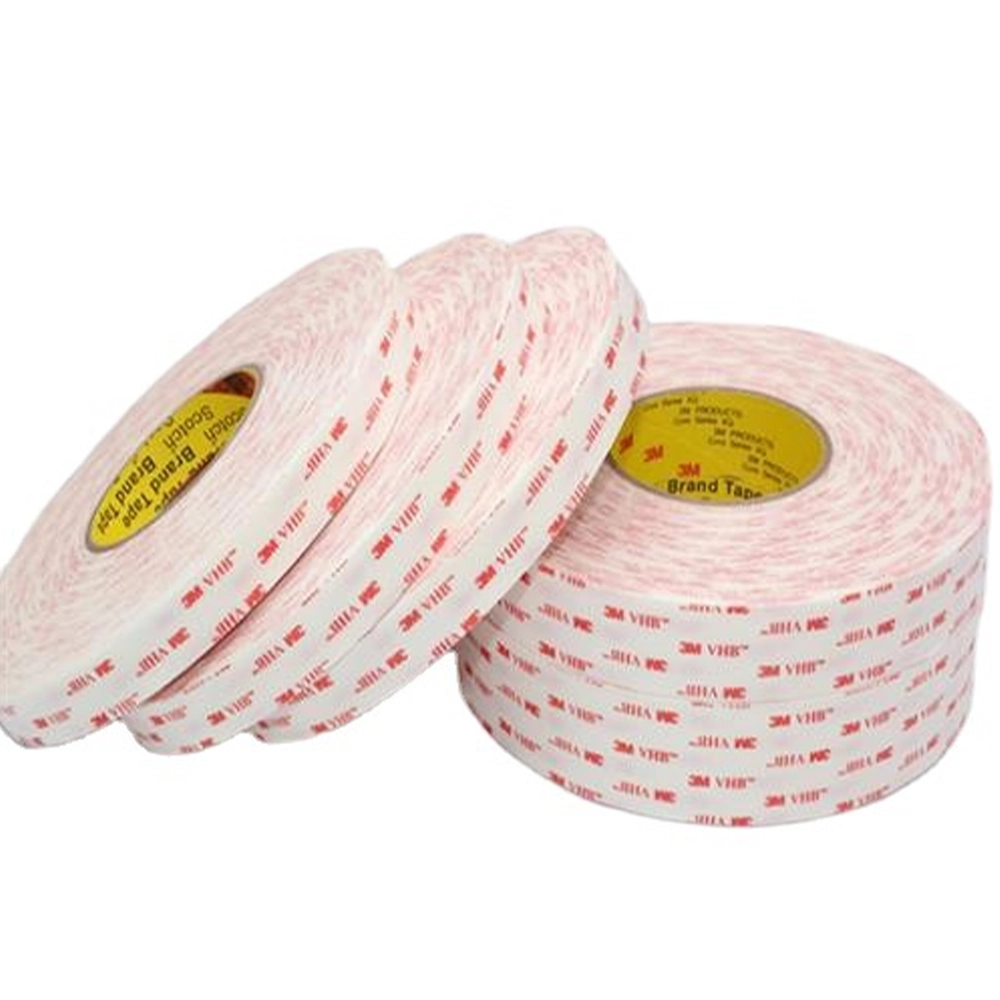
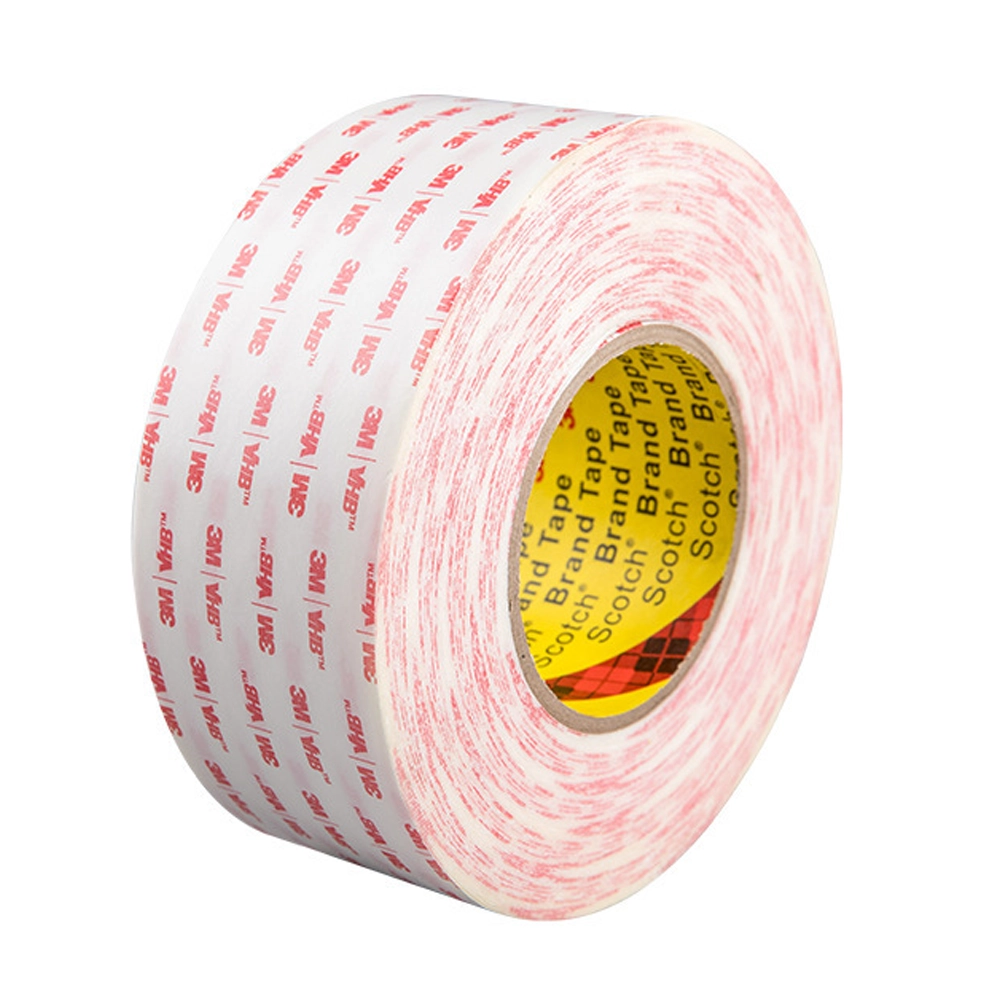
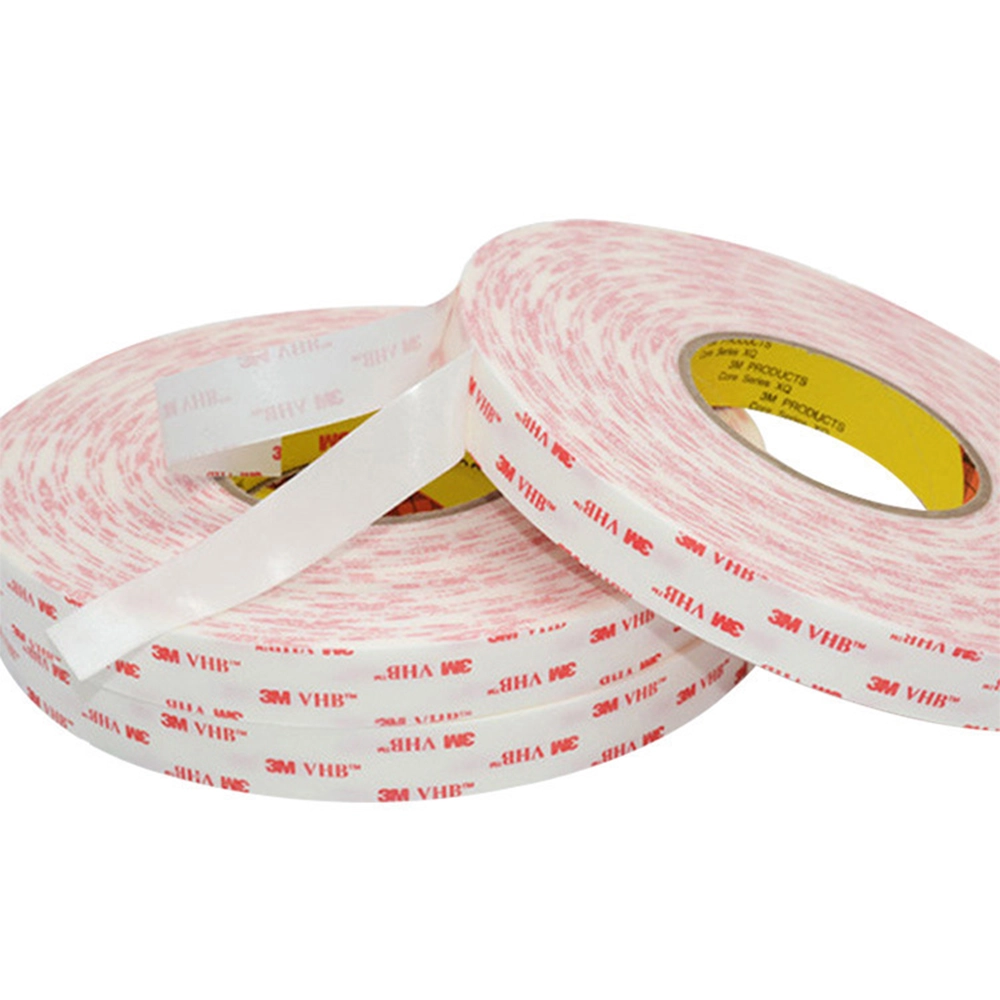
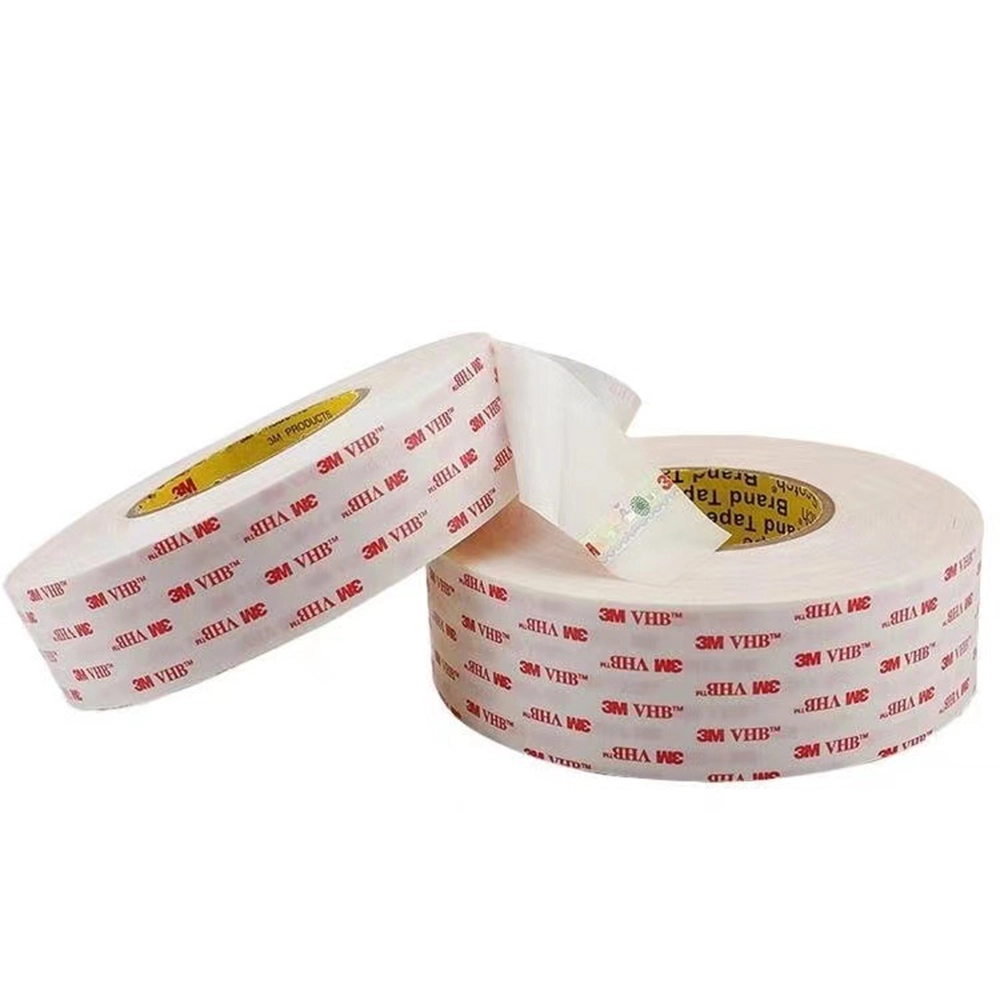
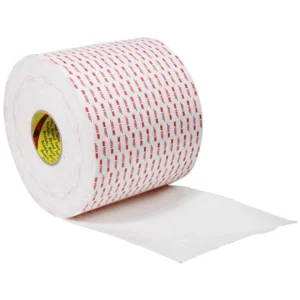
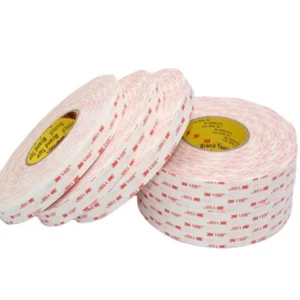
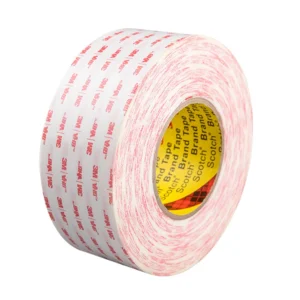
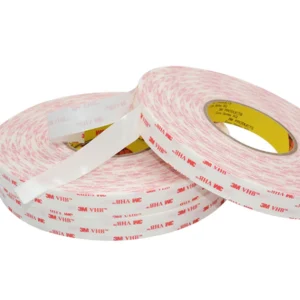
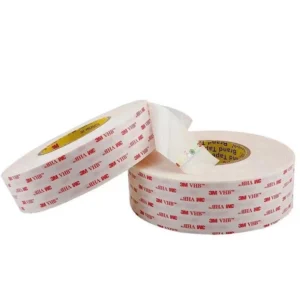
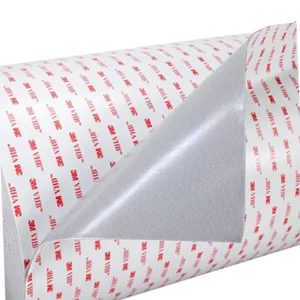
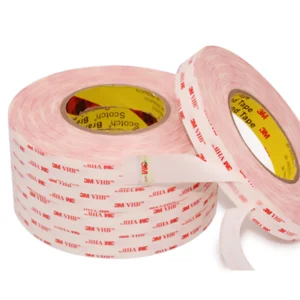
3M 4950 VHB Tape is one of the most widely specified products in the 3M 4950 Family, engineered for permanent structural bonding of metals, glass, composites, and painted surfaces.
Its 1.1 mm thick firm acrylic foam core combines high bond strength, vibration resistance, sealing performance, and long-term durability. The tape is frequently used to replace mechanical fasteners while improving appearance and simplifying manufacturing processes.
Key Functions
- Permanent structural bonding
- Mechanical fastener replacement
- Water and moisture sealing
- Vibration and fatigue resistance
- Multi-material bonding
- Improved design flexibility
Typical Applications
- Panel-to-frame bonding
- Stiffener attachment
- Architectural components
- Transportation assemblies
- Display systems
- Nameplates and logos
Typical Substrates
- Aluminum
- Stainless steel
- Galvanized steel
- Glass
- Acrylic
- Polycarbonate
- Painted metals
- Sealed wood
Quick Facts
- Product Platform: 3M VHB 4950 Family
- Thickness Class: 1.1 mm structural bonding grade
- Adhesive System: General-purpose acrylic
- Foam Type: Firm acrylic foam
- Surface Compatibility: High surface energy materials
- Primary Strength: High shear strength and long-term durability
- Bonding Style: Permanent structural attachment
- Typical Markets: Transportation, electronics, construction, signage, and industrial manufacturing
Why Choose 3M 4950 VHB Tape
Many industrial assemblies require a bonding solution that combines strength, durability, aesthetics, and manufacturing efficiency.
3M 4950 VHB Tape addresses these requirements by eliminating the need for drilling, welding, grinding, and secondary finishing operations. The result is a cleaner assembly process, improved appearance, and reliable long-term performance across a wide range of substrates.
Engineering Principle
Unlike screws or rivets that create concentrated stress points, 3M 4950 distributes loads across the entire bonded interface.
Its viscoelastic acrylic foam core absorbs dynamic stresses, accommodates differential thermal expansion, and helps improve fatigue resistance. This combination of strength and flexibility makes it suitable for demanding industrial environments.
Applications
Industrial Manufacturing
- Equipment enclosure assembly
- Structural reinforcement attachment
- Panel bonding
Construction & Architecture
- Architectural trim installation
- Metal facade attachment
- Decorative component bonding
Transportation
- Interior trim bonding
- Panel assembly
- Lightweight component attachment
Signage & Display
- Nameplates
- Logos
- Display systems
- Sign assembly
Problems Solved
- Visible screws and rivets
- Stress concentration around fasteners
- Water ingress through fastening holes
- Welding-related finishing work
- Vibration-induced loosening
- Manufacturing complexity
Selection Guide
Choose 3M 4950 VHB Tape if:
- High surface energy materials are being bonded
- A thicker bond line is beneficial
- Long-term durability is required
- Mechanical fasteners should be eliminated
- Outdoor weather resistance is important
Consider another VHB grade if:
- Transparent bonding is required
- Low surface energy plastics are the primary substrate
- Extremely thin bond lines are preferred
Technical Specifications
| Property | Value |
|---|---|
| Product Type | Double-sided acrylic foam tape |
| Tape Family | 4950 Family |
| Color | White |
| Thickness | 1.1 mm (0.045 in / 45 mil) |
| Adhesive Type | General-purpose acrylic |
| Foam Type | Firm closed-cell acrylic foam |
| Density | 800 kg/m³ (50 lb/ft³) |
| Long-Term Temperature Resistance | Up to 93°C (200°F) |
| Short-Term Temperature Resistance | Up to 149°C (300°F) |
| Liner Type | Densified Kraft Paper |
| Compatible Materials | Metals, glass, composites, acrylic, polycarbonate, painted surfaces |
Platform Context
3M 4950 is the flagship product of the 3M 4950 Family.
This family utilizes a general-purpose acrylic adhesive on both sides of a firm acrylic foam core and is specifically designed for bonding metals, glass, and other high surface energy materials. The family is widely used across transportation, electronics, appliance, construction, and signage industries because of its combination of strength, durability, and versatility.
Comparison
| Property | 3M 4950 VHB | Mechanical Fasteners | Liquid Adhesives |
|---|---|---|---|
| Appearance | Excellent | Poor | Good |
| Stress Distribution | Uniform | Point Load | Moderate |
| Water Sealing | Excellent | Poor | Good |
| Vibration Resistance | High | Moderate | Moderate |
| Installation Speed | High | Low | Low |
| Surface Damage | None | Yes | No |
Installation Guidelines
- Clean substrates thoroughly before application
- Remove dust, oil, and contaminants
- Apply firm and uniform pressure
- Ensure accurate alignment before bonding
- Allow bond strength to increase before full loading
Common Mistakes
- Applying to contaminated surfaces
- Insufficient application pressure
- Ignoring substrate compatibility
- Immediate loading after installation
- Selecting an incorrect VHB family for the substrate
FAQ
What materials is 3M 4950 designed to bond?
It is primarily designed for metals, glass, composites, acrylic, polycarbonate, and other high surface energy substrates.
Can 3M 4950 replace rivets or screws?
Yes. It is specifically engineered to replace many mechanical fastening methods while maintaining long-term structural performance.
Is 3M 4950 suitable for outdoor use?
Yes. The acrylic foam construction provides excellent resistance to weathering, moisture, UV exposure, and temperature fluctuations.
What is the difference between 4950 and 4941?
4950 uses a firm acrylic foam core optimized for high surface energy materials, while 4941 utilizes a more conformable foam construction designed to better accommodate surface irregularities.
Why is 4950 one of the most commonly specified VHB tapes?
Because it offers a strong balance of bond strength, durability, ease of use, and compatibility with many common industrial materials.
Reviews
There are no reviews yet.