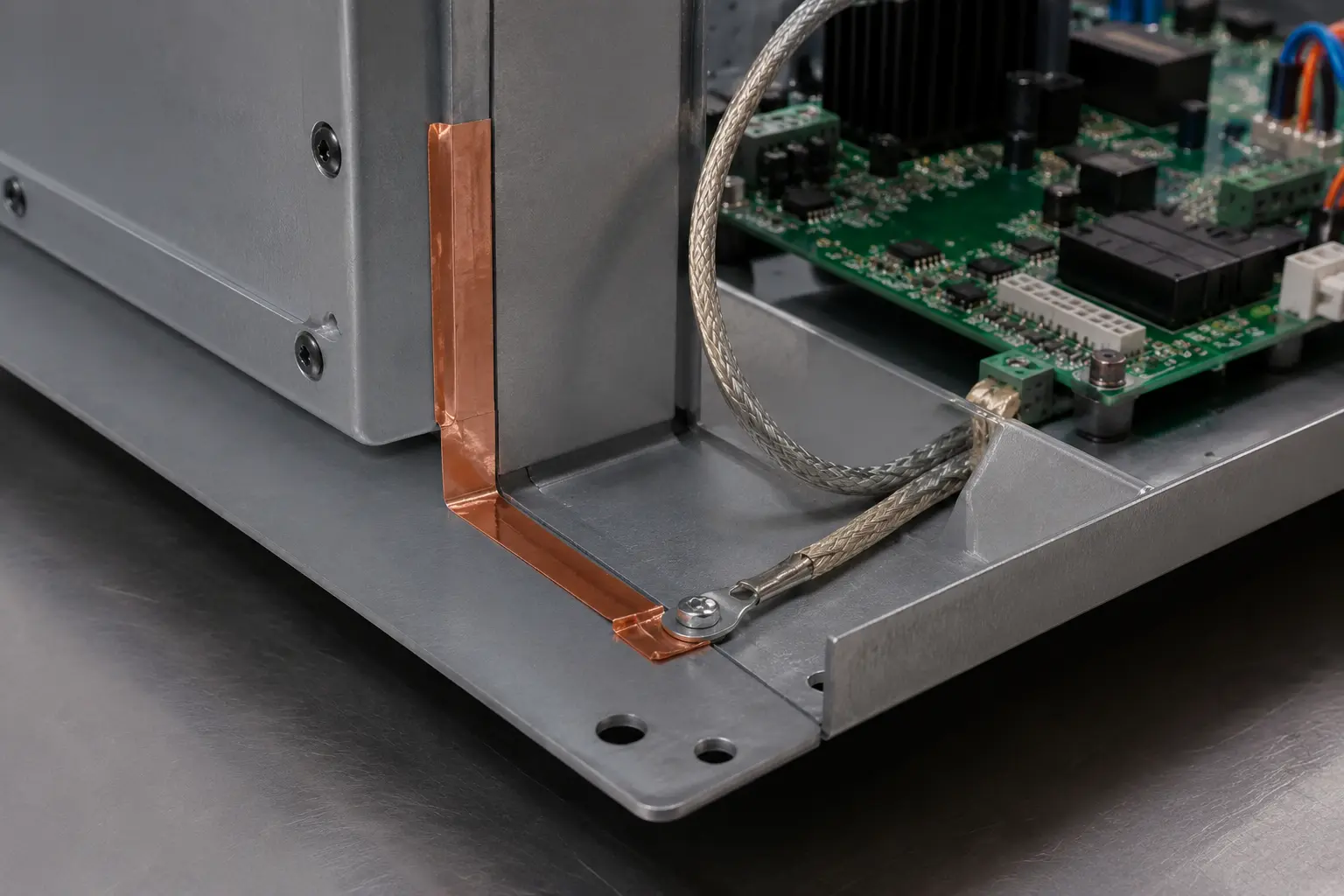
Copper Foil Tape
Solderable shielding, grounding and circuit-related applications with conductive adhesive options.

CUSTOM INDUSTRIAL TAPE SOLUTION
Build the solution around shielding path, grounding, contact resistance, flexibility and die-cut geometry, rather than specifying only a tape name or nominal thickness.
Quick answer: KAWIN customizes copper foil, aluminum foil, conductive fabric and conductive adhesive constructions. Material selection and converted presentation are aligned to the real component and production process.
CUSTOMIZABLE PRODUCT FORMS
These options share one topic, but solve different engineering tasks. Select the closest form, then confirm the construction against your application.
Solderable shielding, grounding and circuit-related applications with conductive adhesive options.
Lightweight shielding and heat-reflective constructions where solderability is not required.
Flexible, conformable shielding for enclosures, cables and display assemblies.
Thin conductive bonding between parts without a separate carrier.
Multi-layer structures balancing conductivity, flexibility and mechanical protection.
Frames, tabs, grounding patches, gasket faces and shielding parts by drawing.
CONFIGURABLE PARAMETERS
The quotation becomes meaningful only when the critical construction and delivery variables are known.
APPLICATION-LED SELECTION
Use these scenarios to identify which details should be tested first.
Continuity across seams and contact pressure control the useful material and adhesive.
Contact area, bend radius and connection method influence copper, aluminum or fabric choice.
Flexibility, overlap and abrasion matter alongside shielding performance.
Thin die-cut geometry and clean placement often dominate handling design.
RELATED CUSTOM SOLUTIONS
These links prevent an isolated page without turning the page into a directory of unrelated tapes.
CUSTOM CONDUCTIVE & EMI SHIELDING TAPE FAQ
Shielding performance depends on electrical continuity, geometry and installation—not foil appearance alone.
Copper foil is often selected for solderability and grounding, aluminum foil for lightweight shielding and barrier applications, and conductive fabric for flexibility and repeated movement. Galvanic compatibility, corrosion exposure, thickness and installation method also influence the choice.
Only a construction specifically designed and verified for through-thickness conductivity should be treated that way. The required resistance, contact area, pressure, substrate finish and aging conditions must be defined before selection.
Validate the complete enclosure or assembly across the relevant frequency range. Seam design, overlap, grounding path, contact resistance, apertures, compression and installation consistency can matter more than the standalone foil or fabric specification.
Yes. Conductive materials can be slit, laminated and die cut into strips, rings, frames, contacts and tabbed parts. Drawings should identify current paths, grounding points, adhesive zones, exposed conductive areas and liner presentation.
Send the substrate, dimensions, service conditions and estimated quantity. We will identify the missing variables before proposing a construction.
Discuss this custom tape