
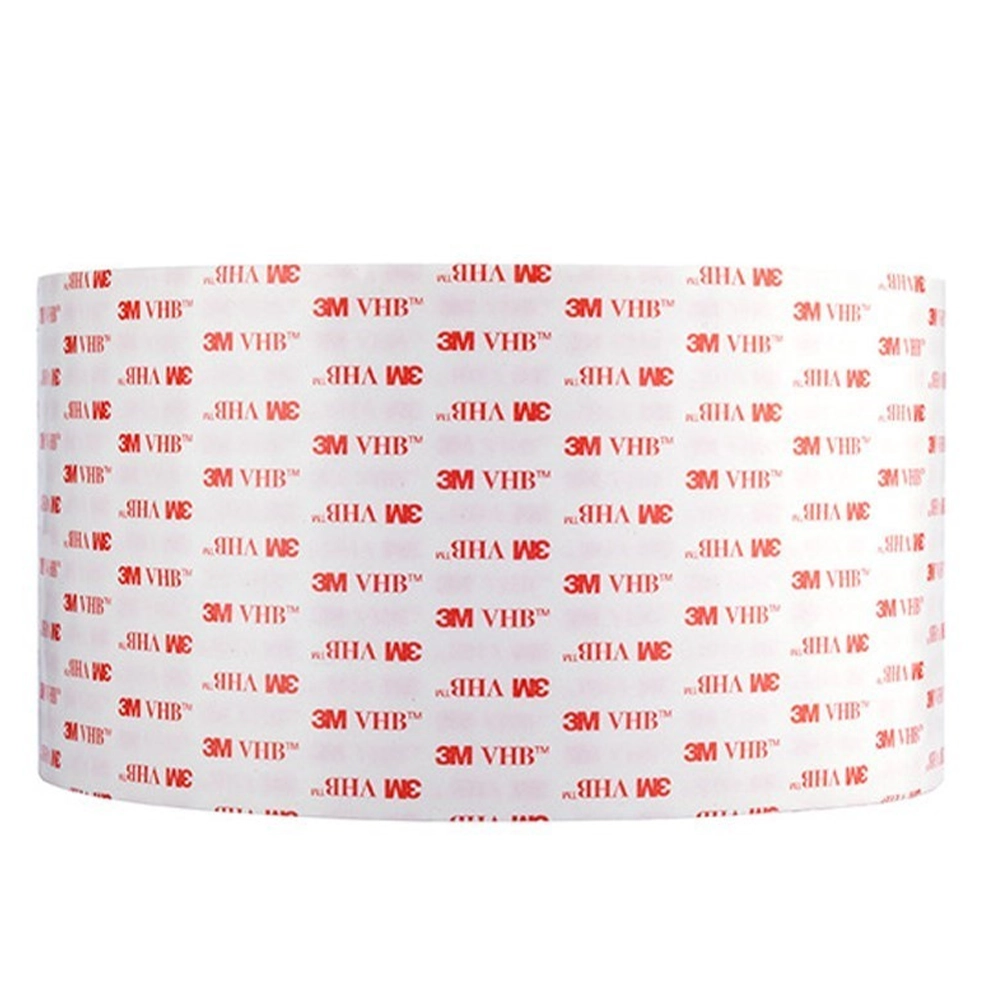
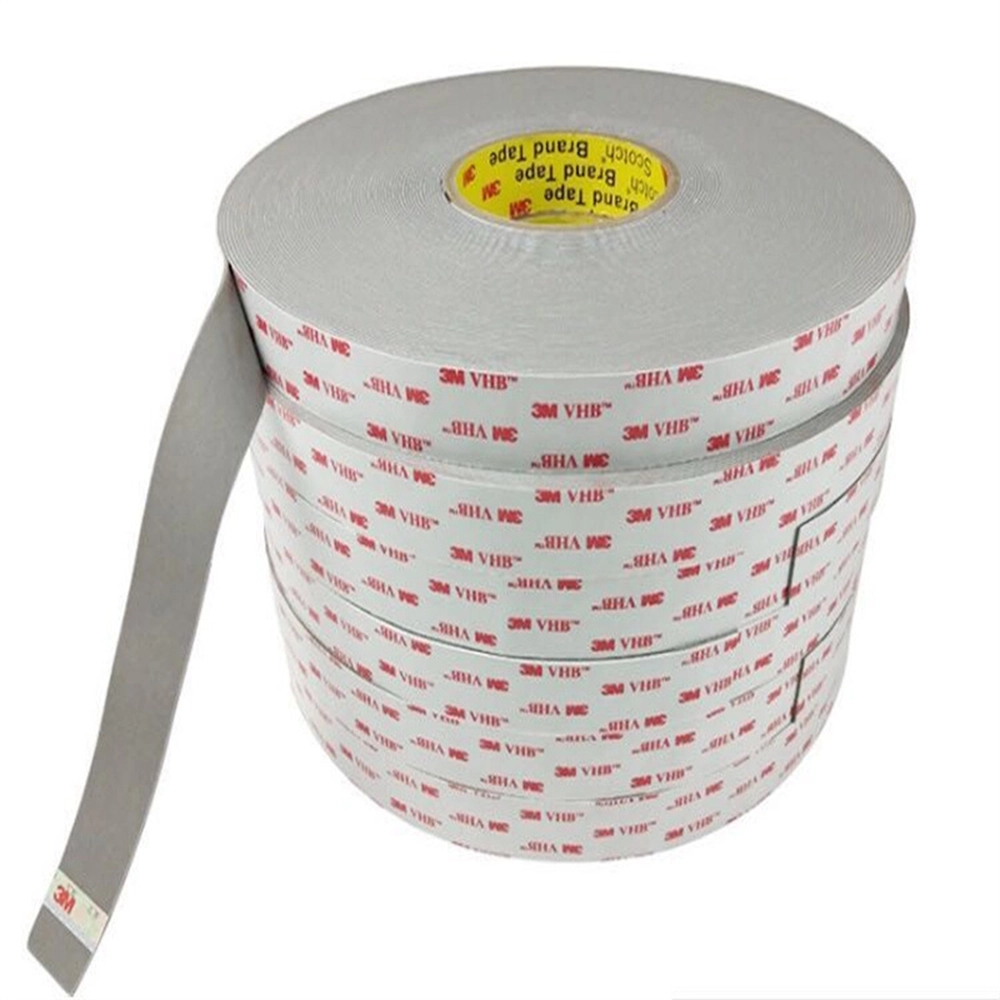
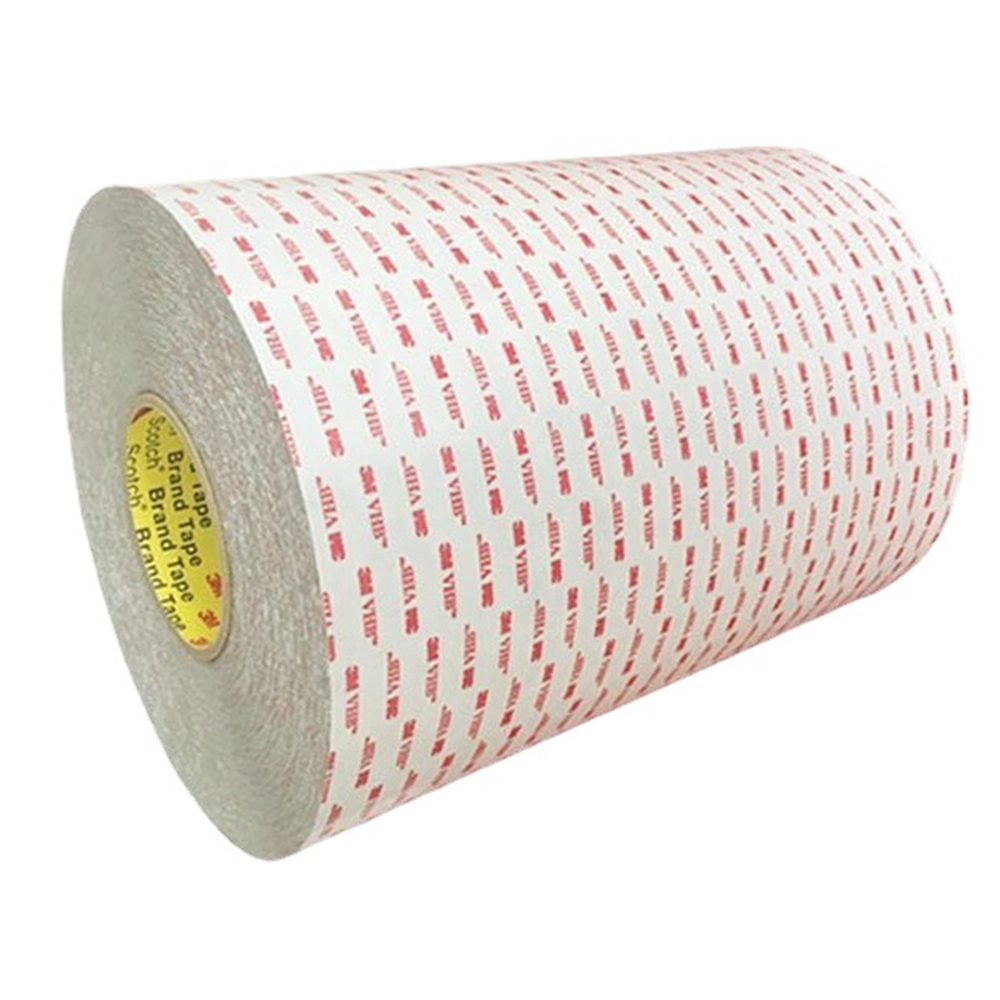
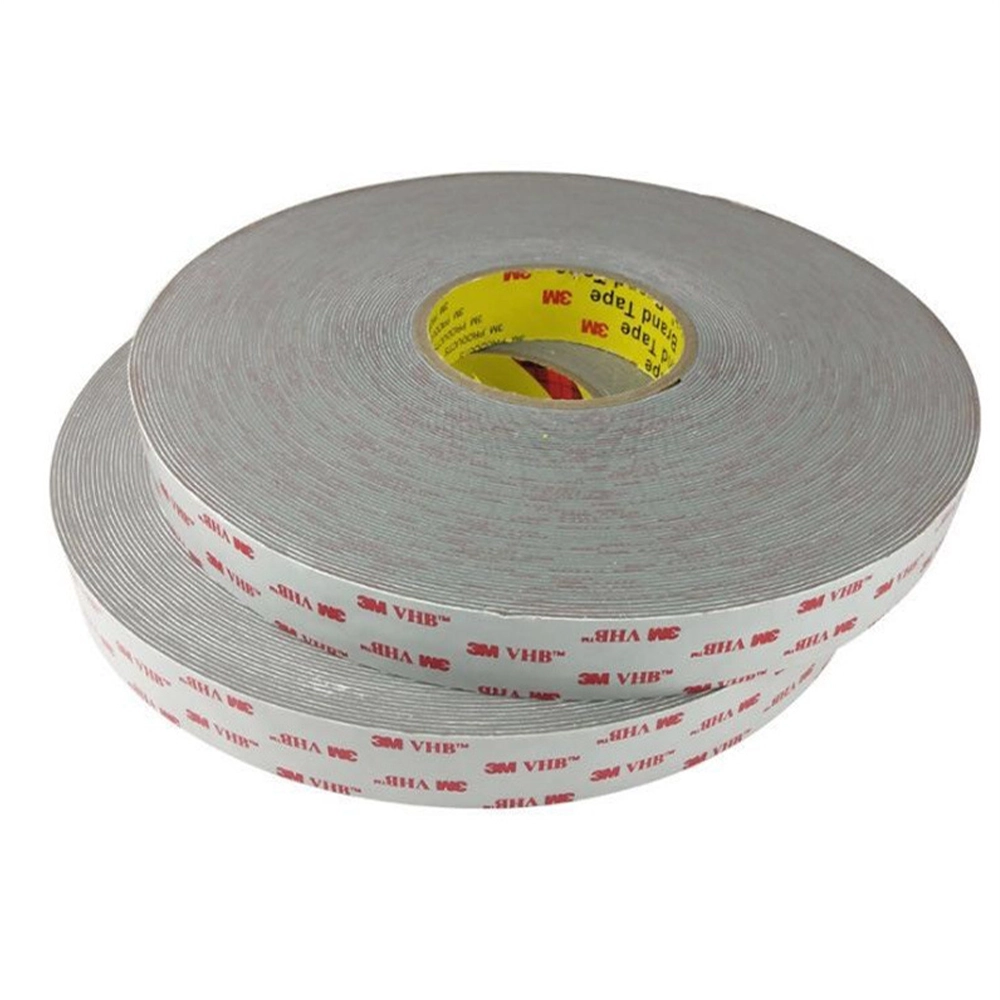
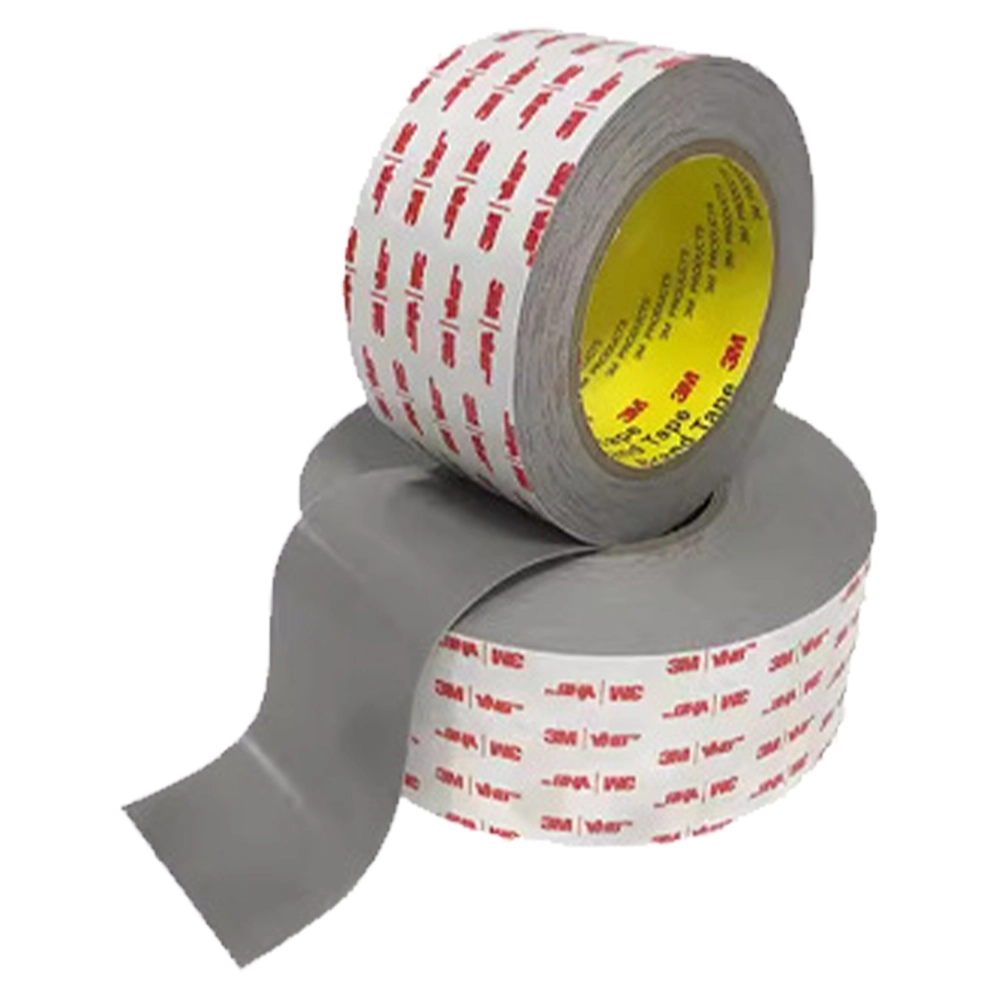
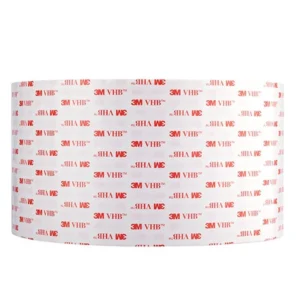
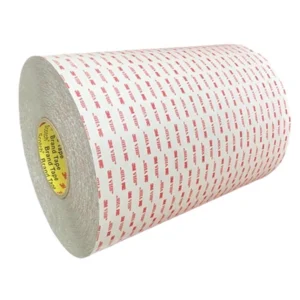
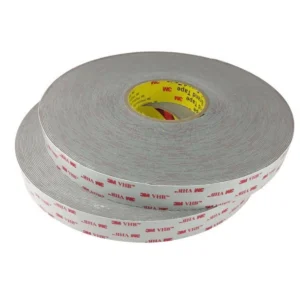
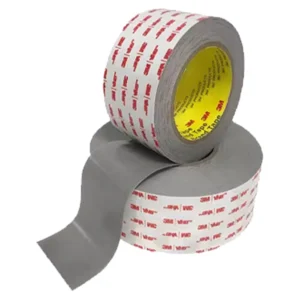
3M 4956 VHB Tape is a thick conformable acrylic foam tape engineered for permanent bonding applications where strength, adaptability, and gap compensation are equally important.
Unlike firmer VHB grades, 4956 is designed to maintain strong contact on slightly uneven or mismatched surfaces. Its 1.6 mm acrylic foam core helps improve bond reliability across metals, glass, painted substrates, and many plastics while providing vibration resistance, environmental sealing, and long-term durability. It belongs to the 3M 4941 Family of VHB tapes.
Key Functions
- Permanent structural bonding
- Surface mismatch compensation
- Mechanical fastener replacement
- Moisture and weather sealing
- Vibration absorption
- Multi-material bonding
Typical Applications
- Metal panel attachment
- Stiffener-to-panel bonding
- Transportation interior assemblies
- Appliance manufacturing
- Signage systems
- Display assembly
Typical Substrates
- Aluminum
- Stainless steel
- Galvanized steel
- Glass
- Acrylic
- Polycarbonate
- ABS
- Painted metals
- Plasticized vinyl
Quick Facts
- Product Platform: 3M VHB 4941 Family
- Thickness Class: 1.6 mm structural bonding grade
- Adhesive System: Multi-purpose acrylic
- Foam Type: Conformable acrylic foam
- Surface Compatibility: High and medium surface energy materials
- Core Advantage: Greater adaptability to uneven surfaces
- Bonding Style: Permanent structural attachment
- Typical Markets: Transportation, electronics, appliances, construction, signage, and industrial manufacturing
Why Choose 3M 4956 VHB Tape
Many bonded assemblies fail because components are not perfectly flat. Manufacturing tolerances, curved surfaces, paint layers, and material variations can reduce effective contact area.
3M 4956 addresses this challenge with a conformable acrylic foam core that adapts to minor surface irregularities while maintaining structural bonding performance. This allows engineers to bond dissimilar materials without the additional complexity associated with drilling, welding, or mechanical fastening.
Engineering Principle
The viscoelastic acrylic foam core distributes loads across the entire bond line rather than concentrating stress at individual fastening points.
Its conformable structure improves contact between slightly mismatched substrates, helping maintain bond strength under vibration, thermal cycling, impact loading, and environmental exposure. This balance of strength and flexibility is the defining characteristic of the 4941 Family.
Applications
Industrial Manufacturing
- Equipment enclosure assembly
- Structural stiffener attachment
- Metal panel bonding
Transportation
- Interior trim installation
- Decorative panel attachment
- Lightweight structural assemblies
Construction & Signage
- Architectural trim attachment
- Sign assembly
- Display systems
Electronics & Appliances
- Display mounting
- Lens attachment
- Housing assembly
Problems Solved
- Surface mismatch between components
- Visible screws and rivets
- Water ingress through fastening holes
- Vibration-induced loosening
- Welding-related finishing work
- Manufacturing complexity
Selection Guide
Choose 3M 4956 VHB Tape if:
- Surfaces are not perfectly flat
- Additional thickness is beneficial
- Multiple material types are being bonded
- Long-term outdoor durability is required
- Mechanical fasteners should be eliminated
Consider another VHB grade if:
- Transparent bonding is required
- Extremely thin bond lines are preferred
- Very rigid bonding without conformability is desired
Technical Specifications
| Property | Value |
|---|---|
| Product Type | Double-sided acrylic foam tape |
| Tape Family | 4941 Family |
| Color | Gray |
| Thickness | 1.6 mm (0.062 in / 62 mil) |
| Adhesive Type | Multi-Purpose Acrylic |
| Foam Type | Conformable Acrylic Foam |
| Density | 720 kg/m³ (45 lb/ft³) |
| Liner Type | Densified Kraft Paper |
| Liner Thickness | 0.08 mm |
| Long-Term Temperature Resistance | Up to 93°C (200°F) |
| Short-Term Temperature Resistance | Up to 149°C (300°F) |
Platform Context
3M 4956 is part of the 3M 4941 Family, a group of VHB tapes built around a multi-purpose acrylic adhesive and a conformable acrylic foam core.
Within the family, 4956 occupies a unique position because its 1.6 mm thickness provides greater tolerance for surface mismatch than thinner grades such as 4936 or 4941. This makes it particularly useful in assemblies where achieving perfect substrate flatness is difficult.
Comparison
| Property | 3M 4956 VHB | 3M 4941 VHB | Mechanical Fasteners |
|---|---|---|---|
| Thickness | 1.6 mm | 1.1 mm | N/A |
| Surface Conformability | Excellent | Very Good | Poor |
| Gap Compensation | Excellent | Good | Poor |
| Stress Distribution | Uniform | Uniform | Point Load |
| Water Sealing | Excellent | Excellent | Poor |
| Appearance | Excellent | Excellent | Poor |
Installation Guidelines
- Clean surfaces thoroughly before application
- Remove dust, oil, and contaminants
- Apply firm and consistent pressure
- Ensure full contact across the bonding area
- Allow bond strength to build before full service loading
Common Mistakes
- Applying to contaminated surfaces
- Insufficient application pressure
- Selecting a thinner tape when gap compensation is needed
- Ignoring substrate compatibility testing
- Applying full loads immediately after installation
FAQ
What is the main advantage of 3M 4956?
Its conformable 1.6 mm acrylic foam core helps maintain contact on slightly uneven or mismatched surfaces while delivering strong structural bonding performance.
What materials can 3M 4956 bond?
It is designed for metals, glass, painted surfaces, acrylic, polycarbonate, ABS, plasticized vinyl, and many other medium and high surface energy substrates.
Can 3M 4956 replace rivets and screws?
Yes. It is specifically designed as a permanent alternative to many mechanical fastening methods and liquid adhesives.
Is 3M 4956 suitable for outdoor applications?
Yes. The acrylic foam construction provides excellent resistance to moisture, weathering, UV exposure, and temperature fluctuations.
How does 4956 differ from 4950?
4956 uses a conformable acrylic foam core optimized for surface adaptation, while 4950 uses a firmer foam structure primarily focused on high surface energy substrate bonding.
Reviews
There are no reviews yet.