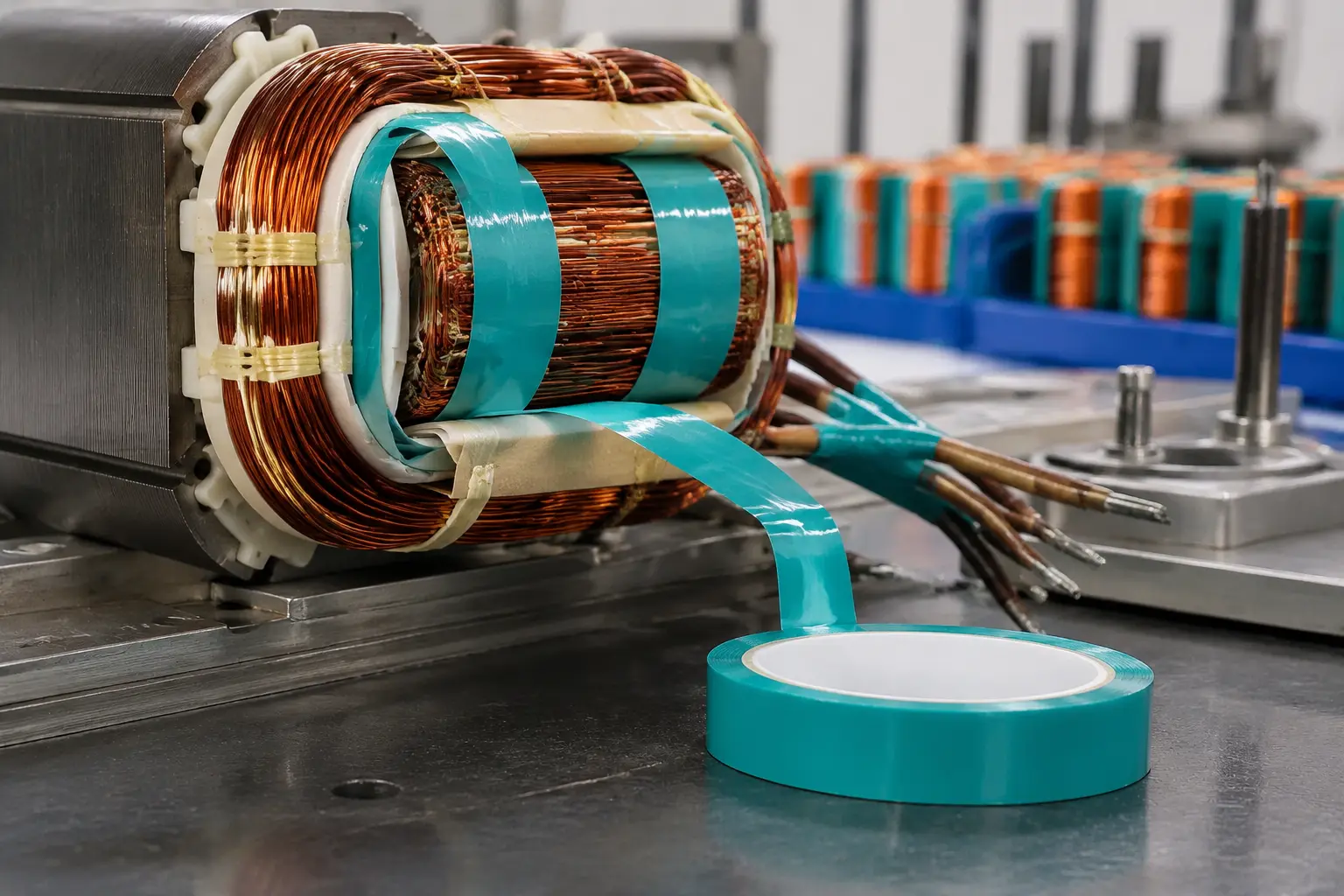
PET / Mylar Tape
Thin dielectric insulation, layer separation and coil wrapping with good dimensional stability.

CUSTOM INDUSTRIAL TAPE SOLUTION
Build the solution around dielectric function, temperature class, abrasion, flame behavior and component geometry, rather than specifying only a tape name or nominal thickness.
Quick answer: KAWIN customizes PET/Mylar, polyimide, acetate cloth, Nomex, fiberglass and flame-retardant constructions. Material selection and converted presentation are aligned to the real component and production process.
CUSTOMIZABLE PRODUCT FORMS
These options share one topic, but solve different engineering tasks. Select the closest form, then confirm the construction against your application.
Thin dielectric insulation, layer separation and coil wrapping with good dimensional stability.
Higher-temperature dielectric protection for motors, batteries, transformers and electronics.
Conformable wrapping and harness insulation with a fabric-like hand.
Aramid-paper insulation and spacing for electrical components and winding systems.
High-strength, abrasion-resistant insulation for demanding thermal and mechanical duty.
Bonding insulation parts where flame behavior and assembly efficiency both matter.
CONFIGURABLE PARAMETERS
The quotation becomes meaningful only when the critical construction and delivery variables are known.
APPLICATION-LED SELECTION
Use these scenarios to identify which details should be tested first.
Wrap tension, overlap, insulation class and impregnation process shape the backing choice.
Die-cut geometry, edge coverage, flame behavior and electrolyte exposure may all matter.
Conformability and abrasion resistance can outweigh maximum dielectric strength.
Thickness tolerance and cut-edge quality influence stacking and automated assembly.
RELATED CUSTOM SOLUTIONS
These links prevent an isolated page without turning the page into a directory of unrelated tapes.
CUSTOM ELECTRICAL INSULATION TAPE FAQ
Electrical performance must be matched to the complete construction, geometry and operating environment.
Options can include PET film, polyimide, acetate cloth, glass cloth, aramid paper and laminated constructions. Material selection depends on dielectric requirements, thermal class, mechanical stress, conformability, abrasion and the winding or assembly process.
No. Backing material, adhesive, defects, overlap, edges, humidity, aging and the finished geometry can all affect insulation performance. Required voltage and test method should be defined before comparing constructions.
Only when the selected material and construction are covered by applicable documentation and the intended use follows its conditions. Certification or recognition should never be inferred from a similar-looking tape, so the exact requirement must be reviewed during specification.
Depending on the material, formats can include slit rolls, narrow coils, sheets, discs, barriers, wraps, laminated parts and kiss-cut components. Winding tension, overlap, liner, edge quality and placement method should be included in the converting specification.
Send the substrate, dimensions, service conditions and estimated quantity. We will identify the missing variables before proposing a construction.
Discuss this custom tape