
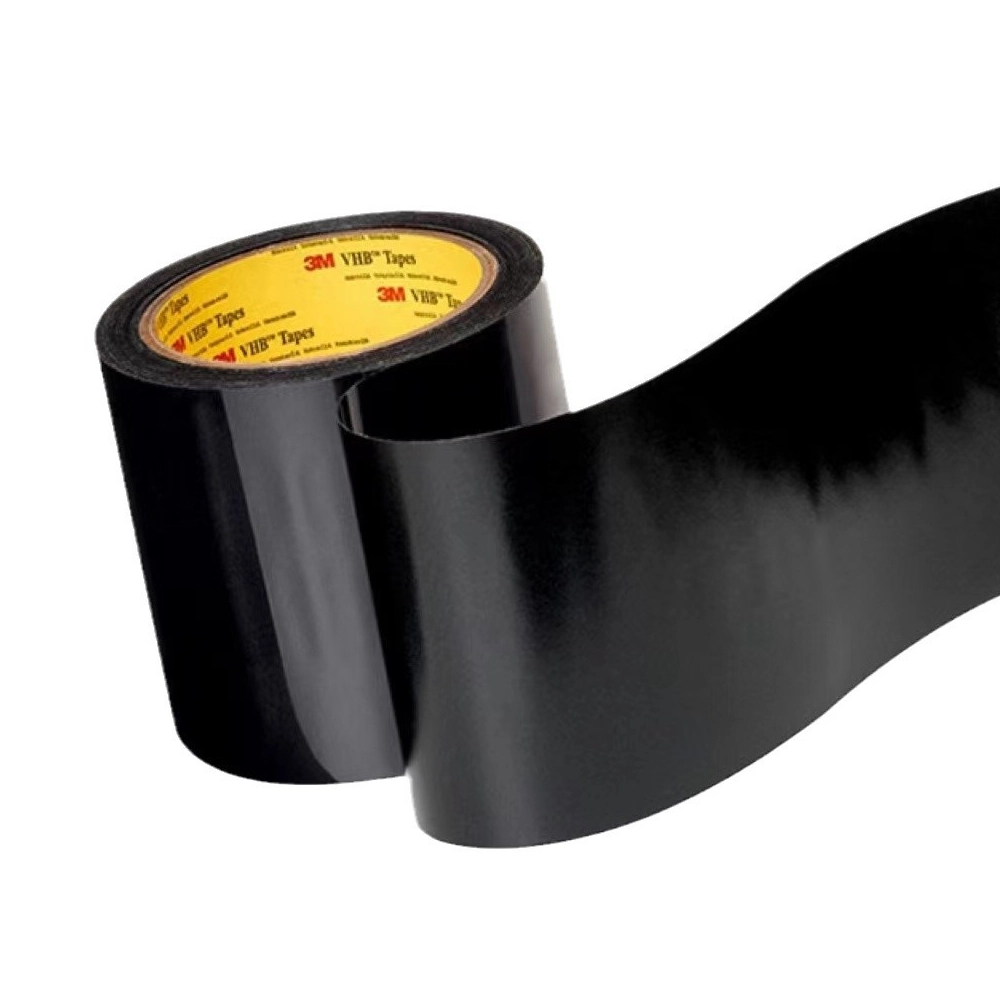
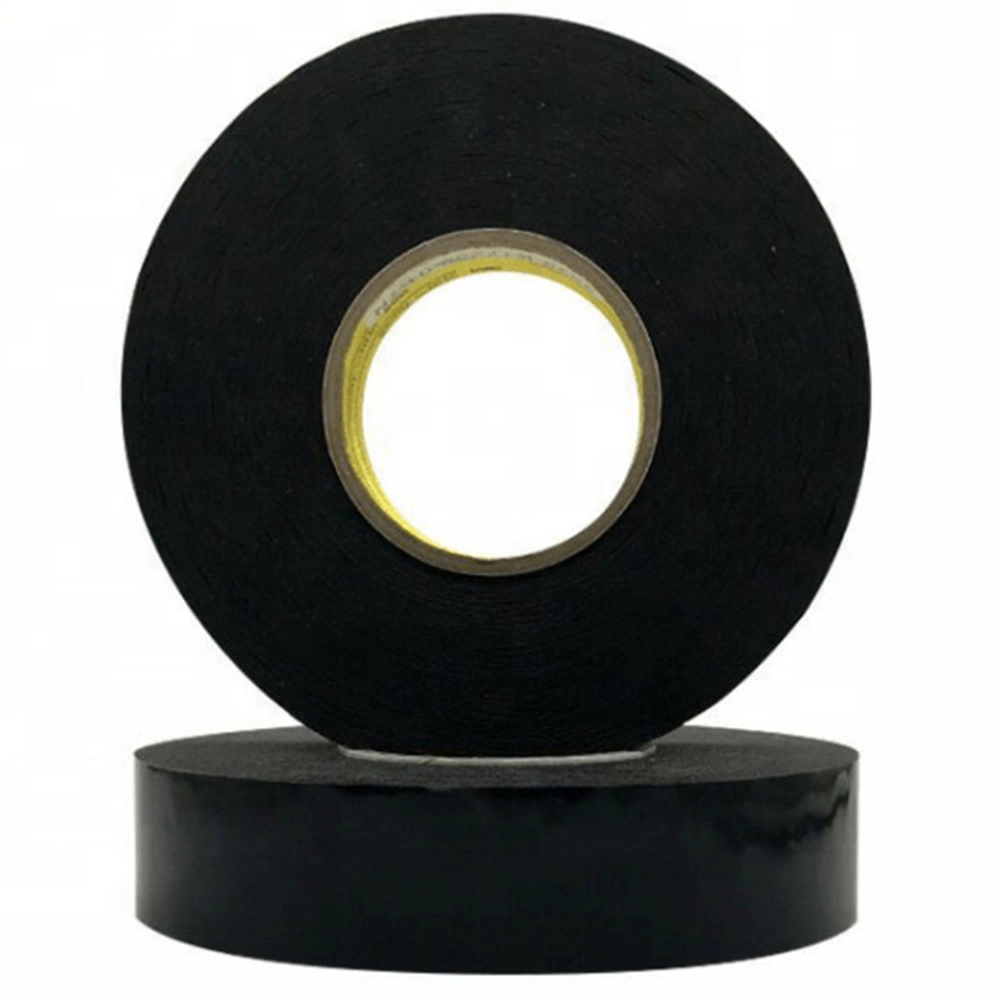
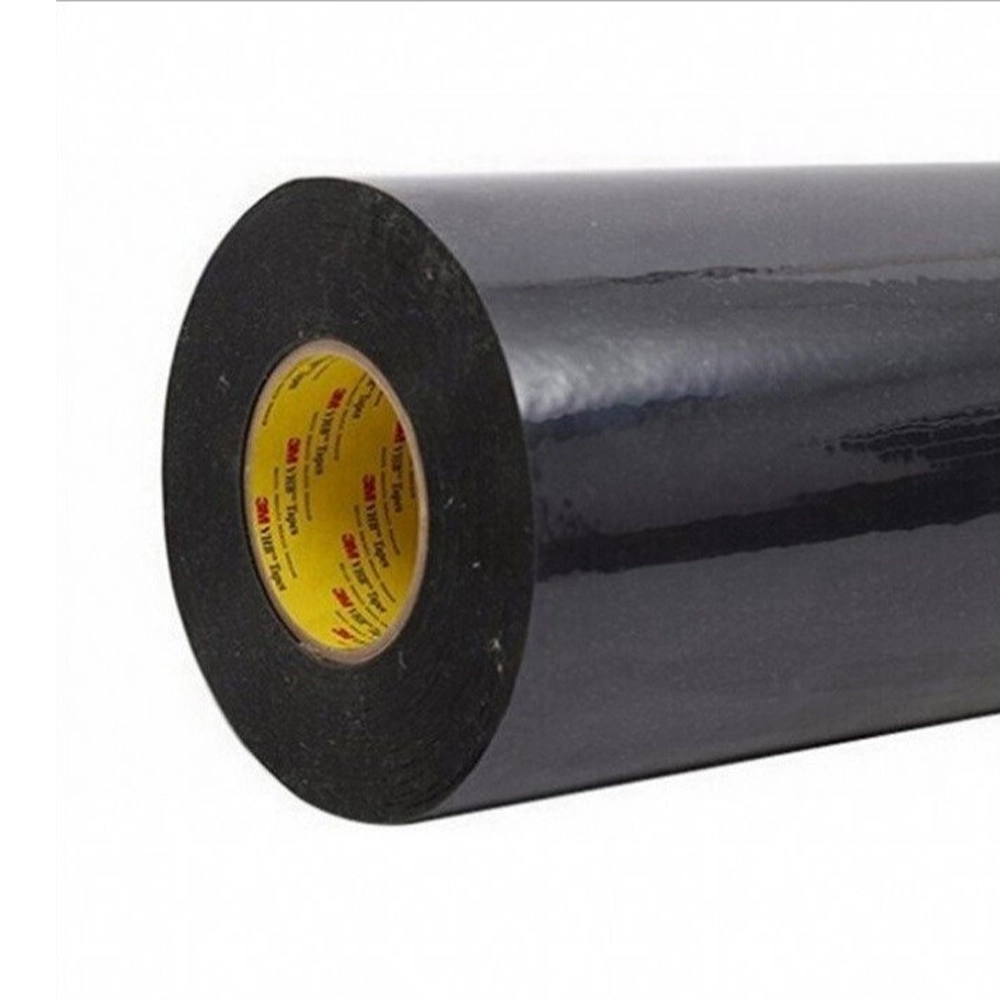
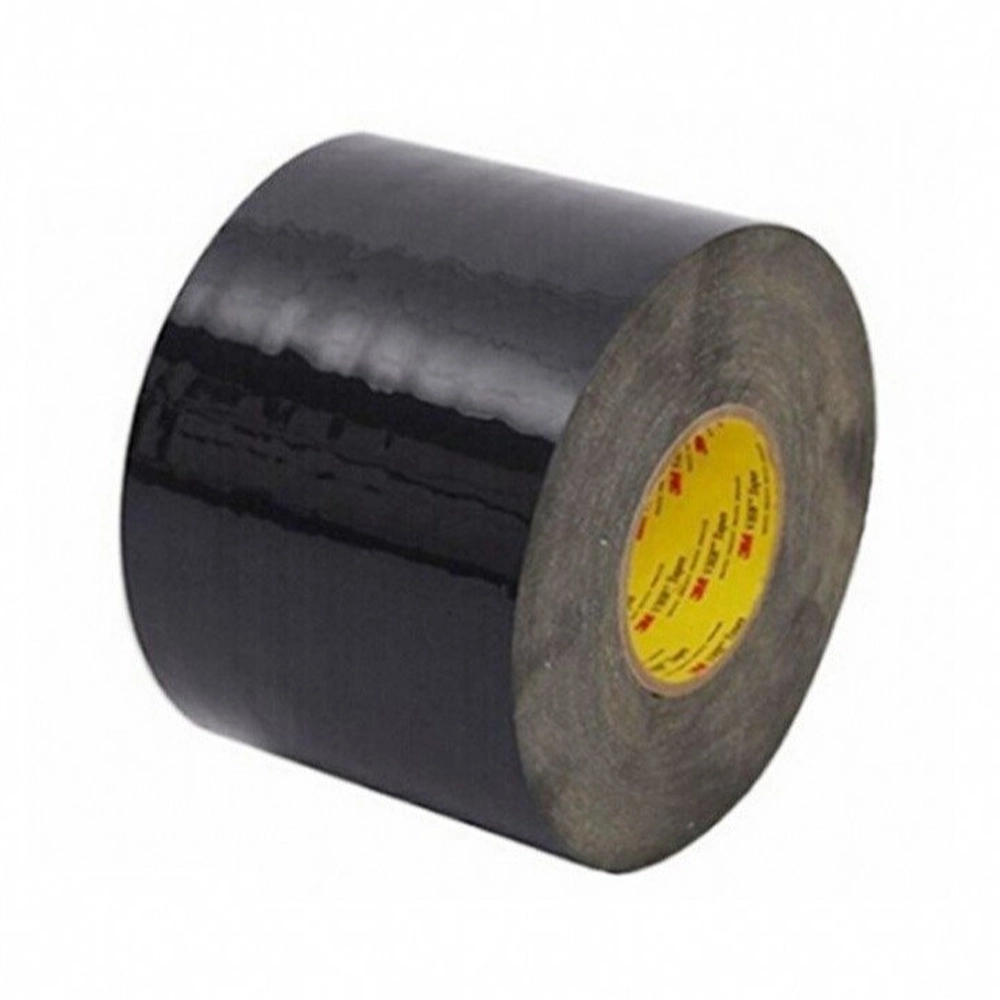
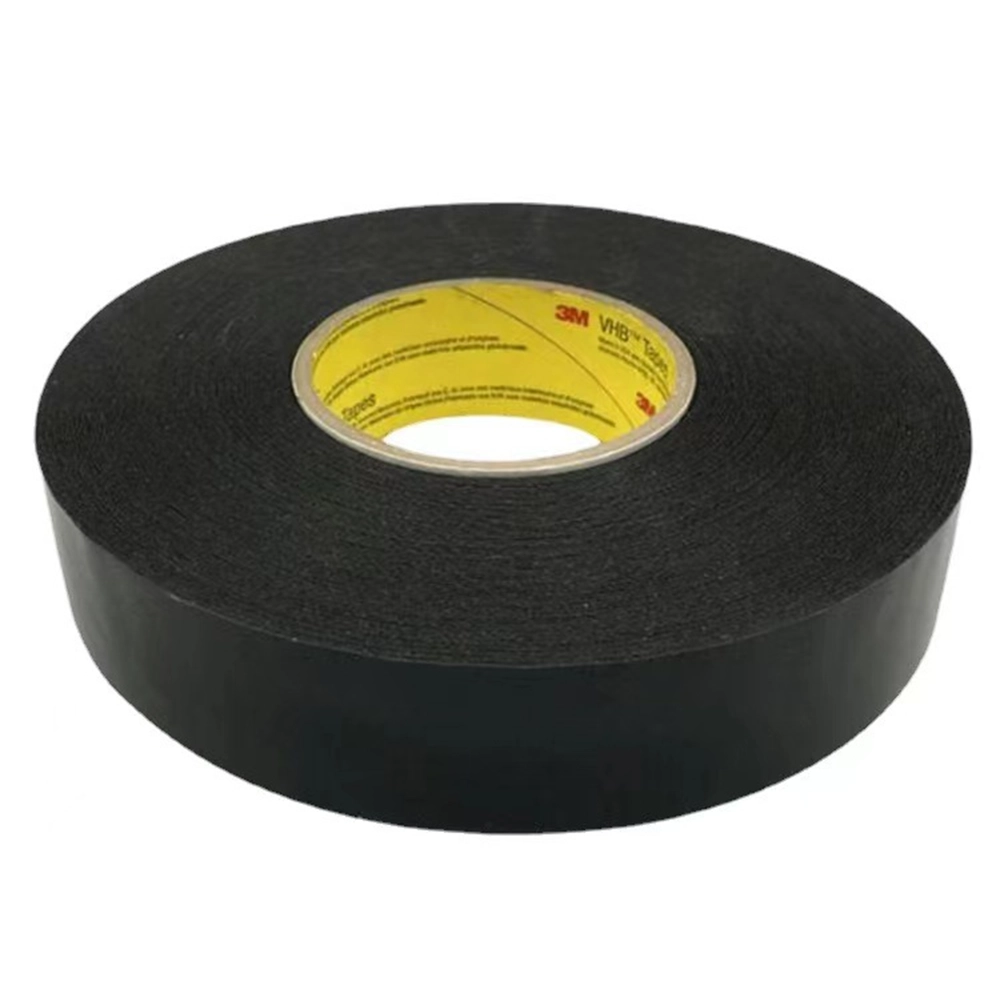
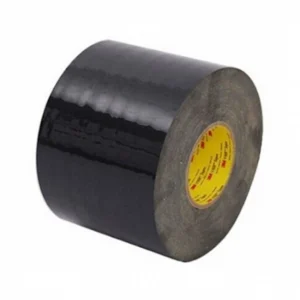
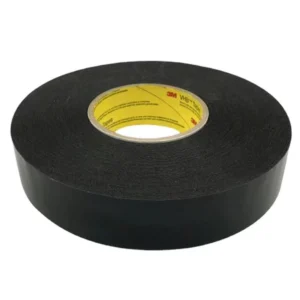
3M™ VHB™ Tape 5908 is a black, 0.25 mm double-sided acrylic foam tape with modified acrylic adhesive on both sides and a clear PET release liner. It belongs to the 3M 5952 VHB Tape family and is designed specifically for permanent assemblies requiring a thin bond line.
Within the 5906–5909 thin-foam range, 5908 occupies the 0.25 mm selection position. It provides more foam thickness than 5906 and 5907 for accommodating minor surface mismatch, while maintaining a thinner assembly profile than 0.30 mm 5909. The primary engineering reason to choose 5908 is therefore bond-line balance, not an assumption that a thicker tape is automatically stronger.
Quick Facts
| Decision Factor | Direct Answer |
|---|---|
| Product category | Double-sided acrylic foam tape |
| Product family | 3M 5952 VHB Tape Family |
| Nominal thickness | 0.25 mm / 0.010 in |
| Tape color | Black |
| Adhesive type | Modified acrylic |
| Foam type | Very conformable acrylic foam |
| Release liner | Clear PET |
| Primary selection advantage | More surface accommodation than 0.15 mm and 0.20 mm thin-foam options |
| Typical applications | LCDs, OLEDs, touch panels, lenses, bezels, logos and control panels |
| Minimum suggested application temperature | 10°C |
| Intended use | General industrial bonding |
The values above are based on current official 3M product information and the English-EU Technical Data Sheet revised in September 2024. 3M identifies the published technical values as representative or typical rather than guaranteed specifications for every final assembly.
Why the 0.25 mm Thickness Is the Main Selection Factor
3M 5908 is not simply another black VHB tape. Its most important differentiator is the 0.25 mm foam construction.
This thickness can be useful when:
- A 0.15 mm or 0.20 mm tape does not provide sufficiently uniform contact
- A display, lens or bezel must remain close to the surrounding housing
- Minor part mismatch must be accommodated without using a conventional 0.6 mm or 1.1 mm foam tape
- A black bond line must remain concealed behind the component
- A die-cut frame requires enough foam body for reliable handling and placement
- Mechanical fasteners or liquid adhesive would complicate assembly
The additional thickness compared with 5906 and 5907 does not make 5908 a gap-filling material. It provides only a limited increase in accommodation and still requires closely matched components with consistent surface contact.
Product-Family Position
| Product | Nominal Thickness | Main Decision Position |
| 3M 5906 | 0.15 mm | Lowest-profile bond line |
| 3M 5907 | 0.20 mm | Minimal profile with slightly more foam thickness |
| 3M 5908 | 0.25 mm | Balanced thin profile with increased surface accommodation |
| 3M 5909 | 0.30 mm | Maximum thickness within the 5906–5909 thin-foam range |
All four products use modified acrylic adhesive, black conformable acrylic foam and a PET liner. Their principal documented distinction is tape thickness.
Typical Applications
3M officially identifies nameplates, logos, electronic displays and bezel bonding as recommended applications for 5908. Additional documented uses include bonding and sealing polycarbonate lenses over LCD assemblies, signage components and windows attached to post-painted control panels.
The broader 3M thin-foam range is also positioned for LCD, OLED, lens, touch-panel, logo and point-of-purchase display construction.
LCD and OLED Assemblies
The 0.25 mm construction can be evaluated for bonding display frames, protective windows, internal mounting structures and decorative surrounds where the final assembly must remain compact.
Touch Panels and User Interfaces
5908 may be converted into narrow strips or closed-frame shapes for touch-panel and control-interface assemblies. Its increased thickness relative to 5906 and 5907 can provide more tolerance for minor surface variation while maintaining a low-profile joint.
Polycarbonate Lenses and Plastic Windows
The black foam can create a concealed attachment layer behind lenses and windows. The actual plastic grade, coating, ink system and edge-loading conditions must be validated before production.
Bezels and Decorative Frames
Continuous tape attachment can avoid visible screws and distribute load over a larger area. This can be particularly useful for appearance-critical assemblies where exposed mechanical fasteners are undesirable.
Nameplates, Logos and Signage
5908 can be considered where a conventional thin transfer tape may provide insufficient tolerance for surface texture, but a standard-thickness foam tape would create excessive spacing.
Painted Control Panels
The modified acrylic adhesive is designed for adhesion to many paints and powder-coated surfaces. Because coating chemistry and texture vary considerably, adhesion should be tested on the exact production finish.
Typical Substrates
The official 3M documentation describes 5908 as bonding to a broad range of high-, medium- and medium/low-surface-energy materials, including:
- Aluminum
- Stainless steel
- Galvanized steel
- Glass
- Acrylic
- Polycarbonate
- ABS
- Composite materials
- Many painted surfaces
- Many powder-coated surfaces
- A wide variety of industrial plastics
Material compatibility cannot be confirmed from the generic substrate name alone. Plastic additives, mold-release residue, surface coatings, inks, paint chemistry, texture and ageing conditions can materially change adhesion.
Best-Fit Conditions
3M 5908 is a strong candidate when the assembly requires:
- A nominal 0.25 mm bond line
- More foam thickness than 5906 or 5907
- Less component spacing than 5909 or thicker 5952-family products
- Permanent pressure-sensitive bonding
- A black adhesive layer concealed behind a lens, bezel or panel
- Bonding to validated plastics, paints, metals or glass
- Immediate handling strength without liquid-adhesive curing
- Precision die-cut frames, rings, strips or mounting pads
- Continuous attachment without visible screws or rivets
- A thin joint capable of distributing dynamic stress over the bonded area
When 3M 5908 May Not Be the Best Choice
Another product should be considered when:
- The lowest possible bond line is required
- The components contain measurable gaps
- Rigid parts have significant flatness variation
- Large manufacturing tolerances must be accommodated
- Substantial thermal movement must be absorbed
- The substrate is untreated polyethylene, polypropylene, TPO or another very-low-surface-energy plastic
- The assembly requires high removability
- A rigid structural joint is required
- The joint will be continuously immersed in chemicals
- The application involves severe cold-temperature impact
- Automotive battery or high-voltage applications require specific product and quality-system approval
The official 3M guidance states that VHB tape can conform to slight substrate mismatch but does not flow to fill gaps. Applications involving rigid substrates and normal flatness variation may require a tape approximately 1.1 mm thick or greater.
Core Technical Specifications
| Property | Officially Documented Value |
| Adhesive type | Modified acrylic |
| Foam type | Very conformable acrylic foam |
| Total tape thickness | 0.25 mm |
| Thickness tolerance | ±15% |
| Tape color | Black |
| Foam density with adhesive | 720 kg/m³ |
| Liner material | PET |
| Primary liner color | Clear |
| Liner thickness | 0.08 mm |
| Minimum suggested application temperature | 10°C |
| Short-term temperature resistance | 149°C |
| Long-term temperature resistance | 121°C |
| Shelf life | 24 months under documented storage conditions |
These values are representative technical data. They should not be treated as guaranteed performance limits or substituted for testing of the complete bonded assembly.
Representative Performance Data
| Property | Test Basis | Typical Value |
| 90° peel adhesion | ASTM D3330; stainless steel; 72-hour dwell; aluminum foil backing | 12 lb/in, approximately 21 N/cm |
| Overlap shear strength | ASTM D1002 / ISO 4587 | 690 kPa |
| Normal tensile strength | ASTM D897; aluminum; 72-hour dwell | 690 kPa |
| Static shear at 23°C | ASTM D3654; stainless steel; 3.23 cm² bond area | 1,000 g for 10,000 minutes |
| Static shear at 66°C | Same test basis | 500 g for 10,000 minutes |
| Static shear at 93°C | Same test basis | 500 g for 10,000 minutes |
| Static shear at 121°C | Same test basis | 250 g for 10,000 minutes |
The performance figures apply to the stated laboratory methods and conditions. Results can change with substrate, coating, tape dimensions, dwell time, application pressure, load direction, temperature and environmental exposure.
Product-Specific Engineering Considerations
More Thickness Does Not Eliminate Part-Flatness Requirements
The 0.25 mm construction provides more foam body than 5906 and 5907, but it remains a thin tape. Both components must still provide sufficiently uniform contact across the intended bond area.
Application pressure can improve adhesive wet-out. It cannot close a structural gap or correct a warped rigid component.
The Main Benefit Is Contact Balance
The practical value of 5908 lies between two competing requirements:
- Keeping the joint sufficiently thin
- Providing enough foam thickness for consistent surface contact
This makes 5908 particularly relevant when 5907 appears marginal in prototype testing but moving to 5909 would create unnecessary spacing.
Edge Design Matters in Lens and Panel Bonding
Lenses, windows and bezels can generate peel or cleavage stress when an edge is lifted, flexed or impacted. Increasing total tape area does not always solve this problem if the joint geometry continues to concentrate stress at one edge.
Where possible, the assembly should:
- Protect the tape edge from direct lifting
- Distribute loads across the bond area
- Avoid continuous preload that bends the bonded component
- Maintain consistent tape width around the complete frame
Dynamic and Static Loads Must Be Evaluated Separately
Acrylic foam is viscoelastic. Its behaviour depends on load duration, loading rate and temperature. A joint that performs well during a short handling or impact event may behave differently under a sustained static load.
Chemical Resistance Has Defined Limits
The TDS reports retained peel performance after controlled exposure to water, salt water, oils and several other fluids. It also states that continuous chemical submersion is not recommended. These figures should therefore be interpreted as resistance to occasional contact under the documented conditions, not universal immersion compatibility.
Surface Preparation
For many substrates, 3M recommends cleaning with a 50:50 mixture of isopropyl alcohol and water before applying the tape.
Additional preparation may be necessary for:
- Heavy oil or grease
- Oxidized metal
- Porous materials
- Glass and glass-like surfaces
- Copper-containing metals
- Plasticized plastics or rubber
- Textured paints and powder coatings
- Low-surface-energy plastics
- Surfaces containing silicone or mold-release residue
The preparation process should be validated with the actual production substrate rather than selected only from a general material description.
Application Guidance for 0.25 mm Assemblies
- Measure actual part flatness and maximum local gap.
- Confirm that a 0.25 mm bond line is compatible with the product design.
- Clean and prepare both substrates using the validated process.
- Apply the tape without stretching or trapping contamination.
- Avoid touching exposed adhesive surfaces.
- Apply firm, uniform roller or platen pressure across the complete bond area.
- Inspect thin-frame die cuts for wrinkles, distortion and incomplete contact.
- Avoid initial application below the documented minimum temperature of 10°C.
- Allow bond strength to develop before applying the maximum service load.
- Validate the complete assembly under production and service conditions.
The ideal application range stated by 3M is approximately 21°C to 38°C. Initial application below 10°C is not recommended.
Common Failure Risks Specific to 5908
Using 5908 as a Gap-Filling Foam
A 0.25 mm construction provides limited accommodation but cannot bridge meaningful gaps between rigid parts.
Choosing 5908 Only Because It Is Thicker
If the assembly already achieves uniform contact with 5906 or 5907, increasing thickness may only add unwanted component spacing.
Choosing 5907 When More Contact Is Actually Required
A prototype may show intermittent contact, local lifting or incomplete wet-out with 5907. Where the mismatch is minor, 5908 may provide a better balance before moving to 5909 or a conventional-thickness foam tape.
Applying Uneven Pressure to a Die-Cut Frame
Narrow display and lens frames can contain corners and thin sections that receive less pressure than straight edges. These areas should be specifically inspected.
Ignoring Component Flex
A lens, window or bezel that is forced flat during assembly may continuously pull against the adhesive after the assembly pressure is removed.
Relying on Generic Plastic Compatibility
Polycarbonate, ABS, acrylic, polypropylene and coated plastics can produce very different bond results. The exact grade and surface treatment must be verified.
3M 5907 vs 5908 vs 5909
| Selection Factor | 3M 5907 | 3M 5908 | 3M 5909 |
| Nominal thickness | 0.20 mm | 0.25 mm | 0.30 mm |
| Bond-line profile | Lower | Balanced | Higher |
| Relative surface accommodation | Lower | Medium | Higher |
| Component spacing | Lower | Medium | Higher |
| Best decision case | Very tight assembly with good flatness | Thin assembly requiring more consistent contact | Maximum thickness allowed within this thin-foam range |
| Main trade-off | Less tolerance accommodation | Balance between contact and spacing | Greater visible or dimensional spacing |
The comparison describes the practical thickness trade-off within a family using the same general adhesive and foam construction. Final selection must be based on the actual part geometry and validation results.
How to Validate 3M 5908 for Production Use
1. Identify the Exact Materials
Document the plastic grade, metal alloy, coating, ink, paint system and surface texture.
2. Measure the Assembly Geometry
Record:
- Maximum local gap
- Part flatness
- Component rigidity
- Tape width
- Corner geometry
- Acceptable final spacing
3. Compare Adjacent Thicknesses
Prototype 5907, 5908 and 5909 where practical. Evaluate whether additional thickness improves contact or only increases spacing.
4. Control the Application Process
Use consistent cleaning, tape dimensions, application pressure, temperature and dwell time.
5. Test Relevant Loads
Depending on the product, evaluate:
- Peel
- Shear
- Cleavage
- Push-out
- Static creep
- Drop impact
- Vibration
- Component flexing
6. Conduct Environmental Ageing
Where relevant, test:
- Heat
- Low temperature
- Humidity
- Water exposure
- Thermal cycling
- UV exposure
- Chemical splash
7. Inspect the Failure Mode
Determine whether failure occurred:
- At the adhesive-to-substrate interface
- Within the acrylic foam
- Within a coating or printed layer
- Within the bonded component
A production decision should be based on complete assembly testing rather than a single published material value.
Advanced Joint Design
The current 3M Technical Data Sheet states that finite element analysis data are available for 5908. This may be relevant for engineering teams modelling stress distribution, joint deformation or long-term loading in more demanding assemblies.
KAWIN B2B Supply and Converting Support
Depending on material availability and project requirements, KAWIN can support:
- Custom-width slit rolls
- Precision die-cut display frames
- LCD and OLED mounting parts
- Polycarbonate lens bonding frames
- Touch-panel adhesive components
- Nameplate and logo mounting pads
- Kiss-cut parts on rolls or sheets
- Extended liner tabs
- Prototype samples
- Custom packaging and labeling
- Evaluation of technically comparable acrylic foam tapes
For an accurate application review, provide:
- Exact substrate and coating
- Part drawing
- Required tape dimensions
- Dimensional tolerance
- Maximum acceptable bond-line thickness
- Service temperature
- Load direction
- Environmental exposure
- Estimated annual volume
Availability of genuine 3M 5908 material, regional roll dimensions and converted formats should be confirmed for each enquiry.
Frequently Asked Questions
What is 3M 5908 tape used for?
3M 5908 is used for thin-profile permanent bonding applications including electronic displays, LCD and OLED assemblies, touch panels, bezels, polycarbonate lenses, nameplates, logos, signage and windows attached to painted control panels.
How thick is 3M 5908?
The nominal total tape thickness is 0.25 mm, equivalent to 0.010 inch, excluding the release liner.
What is the difference between 3M 5907 and 5908?
The main documented difference is thickness. 5907 is 0.20 mm, while 5908 is 0.25 mm. Choose 5907 where minimal spacing is the higher priority and 5908 where slightly more foam thickness is needed to improve surface contact.
What is the difference between 3M 5908 and 5909?
5908 is 0.25 mm thick and 5909 is 0.30 mm thick. The 5908 option creates a thinner assembly, while 5909 provides the greatest thickness within the 5906–5909 thin-foam range.
Can 3M 5908 fill gaps?
It can accommodate minor substrate mismatch, but it does not flow to fill meaningful gaps. Rigid components with significant flatness variation generally require a thicker foam tape or a redesigned joint.
Can 3M 5908 bond polypropylene?
Adhesion to untreated polypropylene should not be assumed. The exact polypropylene grade, additives, surface preparation and service conditions must be tested. Treatment, an adhesion promoter or another tape family may be required.
Is 3M 5908 suitable for touch-panel and lens die cutting?
Its thin PET-lined construction is suitable for evaluation in precision frames, rings and narrow mounting parts. Die-cut stability, corner geometry, liner removal and dimensional tolerance should be verified using the actual component design.
What is the minimum application temperature?
The documented minimum suggested application temperature is 10°C. Initial application below this temperature is not recommended.
Technical Data Sources and Applicability
This page was prepared using:
- The official 3M VHB Tape 5908 product page
- The 3M VHB Tape 5908 English-EU Technical Data Sheet, revised September 2024
- Official 3M technical documentation for the 5906, 5907, 5908 and 5909 thin-foam family
- Official 3M thin-foam application and family comparison literature
Published values are representative laboratory data and are not guaranteed specifications for every assembly. Customers are responsible for determining suitability for their intended substrate, coating, joint design, application process, service environment and regulatory requirements.
3M and VHB are trademarks of 3M Company. KAWIN is an independent industrial tape supplier and converter unless a specific commercial relationship is expressly stated.
Reviews
There are no reviews yet.