
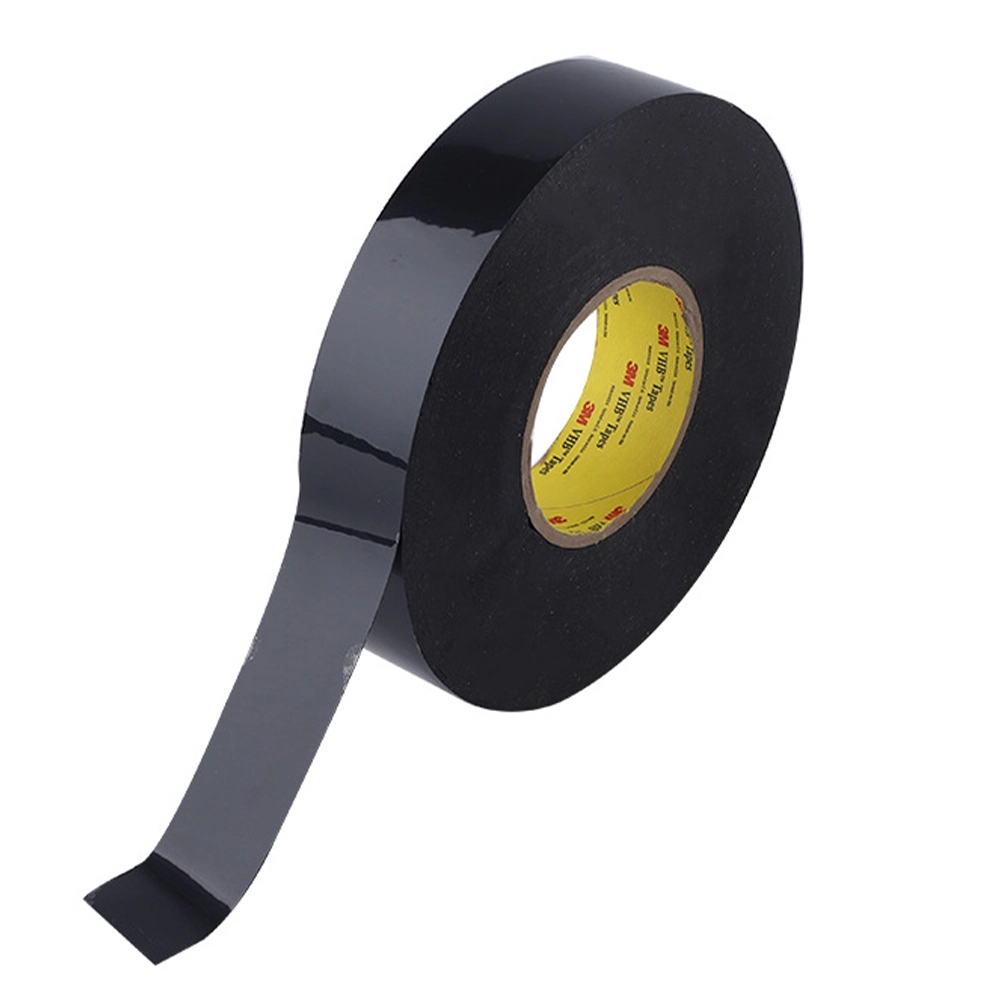
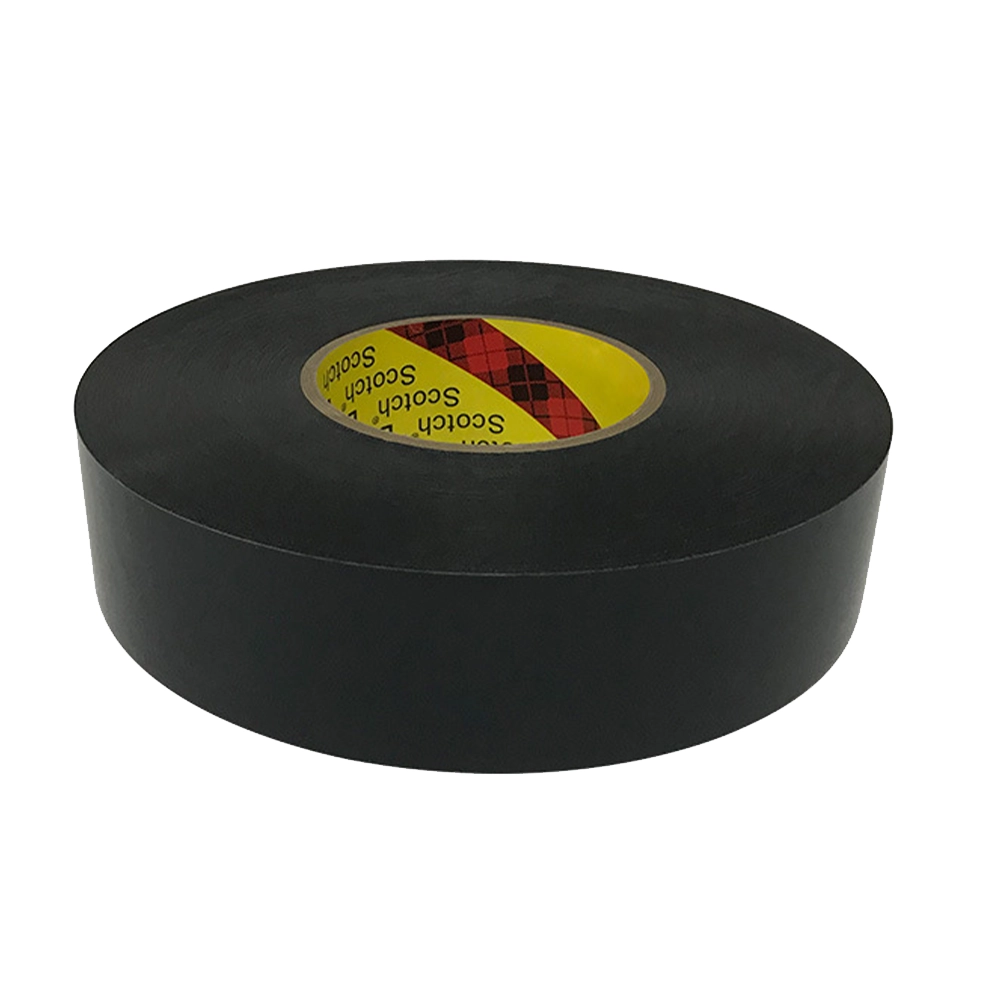
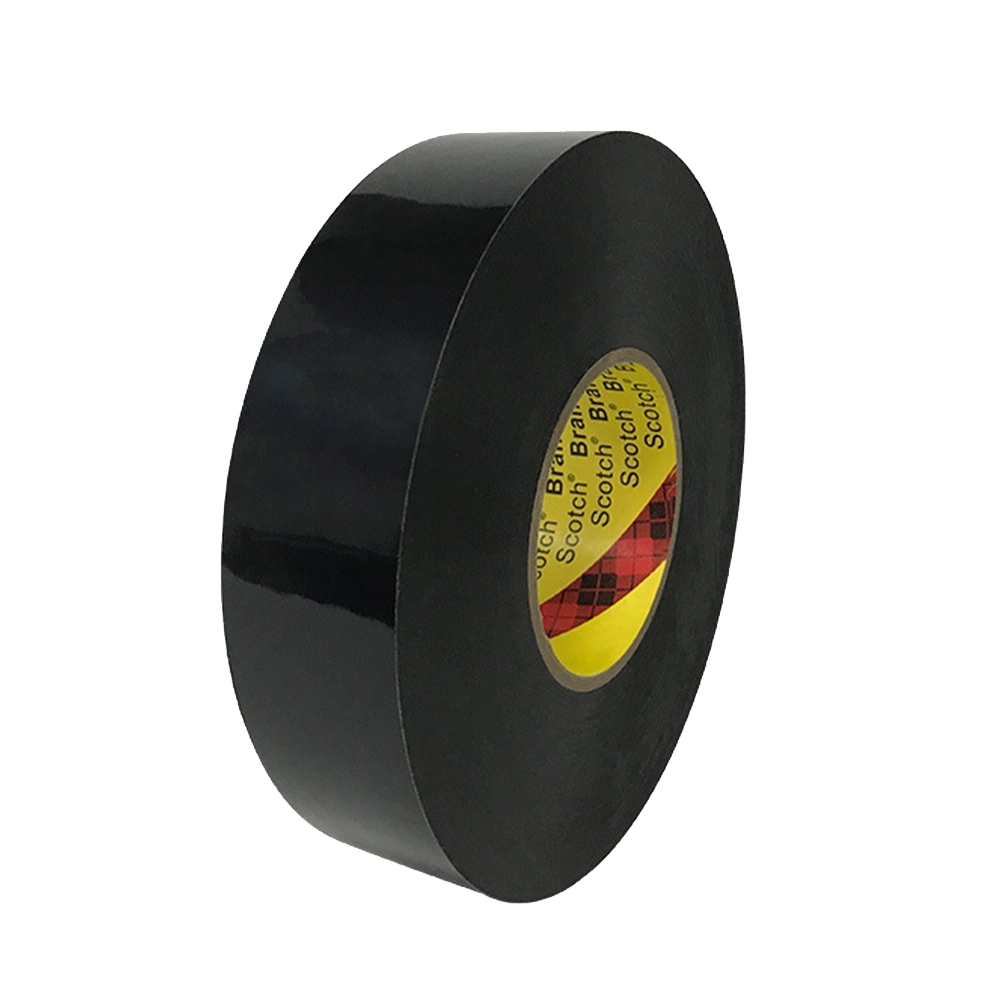
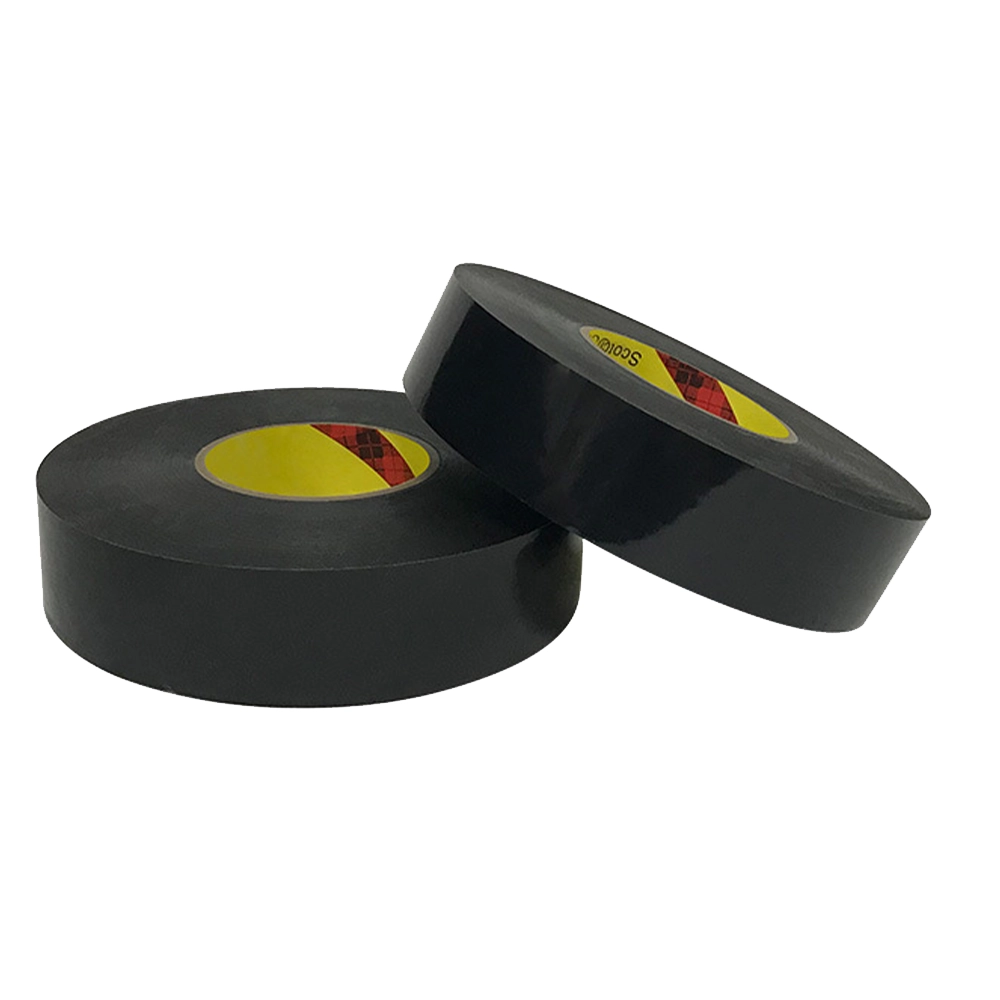
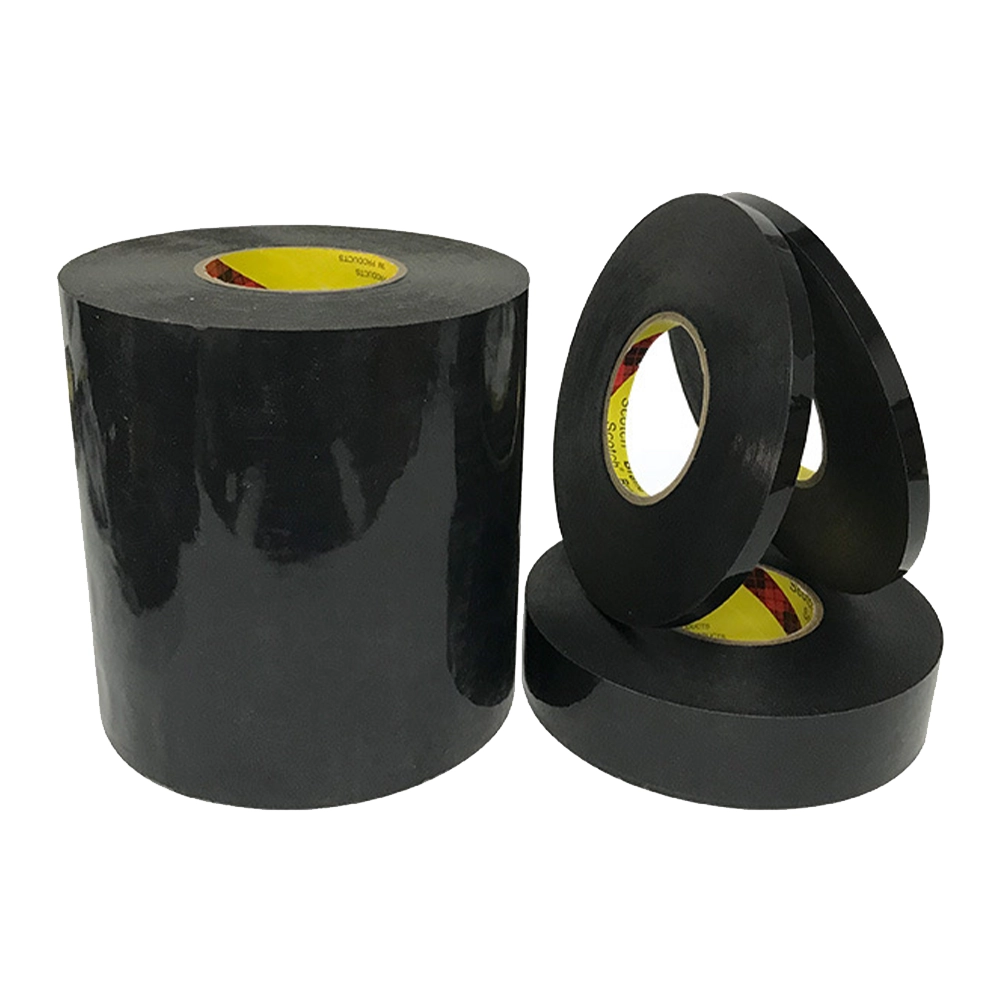
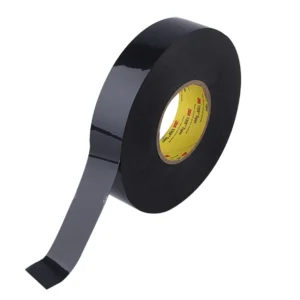
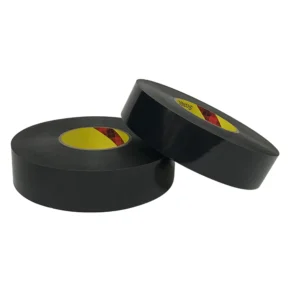
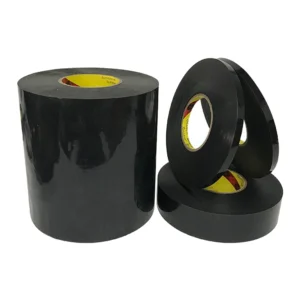
3M™ VHB™ Tape 5906 is an ultra-thin member of the 3M 5952 VHB Tape family. It combines modified acrylic adhesive on both sides with a very conformable acrylic foam core and a clear PET release liner.
Its defining feature is its nominal 0.15 mm thickness. This low-profile construction makes 5906 particularly useful for assemblies in which a thicker foam tape could affect component alignment, create an unwanted gap, or remain visible around the edge of a display, lens, bezel, or decorative part.
Quick Facts
| Decision Factor | Direct Answer |
|---|---|
| Product category | Double-sided acrylic foam tape |
| Product family | 3M 5952 VHB Tape Family |
| Nominal thickness | 0.15 mm / 6 mil |
| Tape color | Black |
| Adhesive | Modified acrylic |
| Foam construction | Very conformable acrylic foam |
| Release liner | Clear PET |
| Primary advantage | Permanent bonding with minimal component spacing |
| Typical applications | Displays, bezels, lenses, nameplates, and logos |
| Minimum suggested application temperature | 10°C |
| Application validation | Required on the actual substrate and joint design |
The values above are based on official 3M technical documentation. They are representative product data rather than guaranteed performance values for every assembly.
B2B Supply and Converting Support
KAWIN supports industrial tape projects that require custom roll dimensions, converted parts, or alternative acrylic foam tape evaluation.
Available services may include:
- Custom-width slit rolls
- Precision die-cut parts
- Kiss-cut parts supplied on rolls or sheets
- Display and lens bonding frames
- Rings, gaskets, and mounting pads
- Extended liner tabs for easier removal
- Prototype parts for assembly trials
- Custom roll length and packaging
- Material matching for cost or supply-chain alternatives
Availability of genuine 3M 5906 material, converted formats, and technically comparable alternatives should be confirmed for each enquiry.
Request a quotation, sample, or die-cut evaluation by providing the substrate, part drawing, service temperature, required dimensions, and estimated annual volume.
Why the 0.15 mm Profile Matters
The main reason to choose 3M 5906 is not simply that it is a VHB tape. It is the combination of VHB acrylic foam technology with an unusually thin bond line.
A low-profile bond can help when:
- The space between components must remain minimal
- A bezel or lens must sit close to the surrounding housing
- The tape edge should remain hidden
- A thicker foam could interfere with fit or appearance
- Lightweight decorative parts require continuous attachment
- Drilling, screws, or liquid adhesive would complicate assembly
However, thin construction involves an engineering trade-off. A 0.15 mm tape provides less tolerance compensation than thicker VHB products. It should therefore be selected for surfaces that are sufficiently smooth, closely matched, or flexible enough to achieve consistent adhesive contact.
Typical Applications
3M identifies the following recommended applications for Tape 5906:
- Nameplates and logos
- Electronic displays
- Bezel bonding
- Polycarbonate lenses over LCD assemblies
- Signage components
- Plastic windows bonded to painted control panels
Other low-profile industrial applications may also be considered when the substrate, joint design, and service conditions are compatible with the tape.
Electronic Displays and Bezels
The thin bond line can help maintain accurate component alignment around displays, touch-interface housings, decorative frames, and bezel assemblies.
Polycarbonate and Plastic Lenses
5906 may be evaluated for attaching polycarbonate lenses and plastic windows where a black, concealed adhesive layer is preferred.
Nameplates, Logos, and Decorative Parts
Continuous tape attachment can distribute stress across the bonded area while avoiding visible screws, rivets, or mounting holes.
Painted Control Panels and Housings
The modified acrylic adhesive is designed to bond to many paints and powder-coated surfaces, although the specific coating formulation must be tested before production approval.
Typical Substrates
The 5952 adhesive family is designed for adhesion to a broad range of high-, medium-, and medium/low-surface-energy substrates, including:
- Aluminum
- Stainless steel
- Galvanized steel
- Glass
- Acrylic
- Polycarbonate
- ABS
- Composite materials
- Many painted surfaces
- Many powder-coated surfaces
- Selected industrial plastics
Compatibility should not be assumed solely from a general material name. Plastic grade, additives, mold-release agents, coating chemistry, surface roughness, and contamination can all influence adhesion.
Best-Fit Conditions
3M 5906 is a strong candidate when the application requires:
- A nominal 0.15 mm bond line
- Permanent pressure-sensitive attachment
- Minimal spacing between components
- A black tape hidden behind a dark bezel or decorative part
- Bonding to a validated paint, powder coat, metal, glass, or plastic
- Immediate handling strength without liquid-adhesive curing
- Precision die-cut frames, rings, or mounting parts
- A clean exterior without visible mechanical fasteners
When 3M 5906 May Not Be the Best Choice
A thicker or differently formulated tape may be more appropriate when:
- Significant gaps must be filled
- Rigid components have poor flatness
- Large manufacturing tolerances must be accommodated
- The assembly requires greater movement absorption
- The substrate is an untreated very-low-surface-energy plastic
- The joint will carry a sustained static load with limited tape area
- Severe cold-temperature impact is expected
- The application requires a rigid rather than flexible joint
- Automotive battery or high-voltage quality requirements apply
VHB tape can conform to some surface mismatch, but it does not flow to fill gaps. For rigid materials with normal flatness variation, a thicker tape should be considered. Thin tapes become more practical as substrate flatness and flexibility improve.
Core Technical Specifications
| Property | Officially Documented Value |
| Adhesive type | Modified acrylic |
| Foam type | Very conformable acrylic foam |
| Total tape thickness | 0.15 mm |
| Thickness tolerance | ±15% |
| Tape color | Black |
| Foam density with adhesive | 720 kg/m³ |
| Liner material | PET |
| Primary liner color | Clear |
| Liner thickness | 0.08 mm |
| Minimum suggested application temperature | 10°C |
| Short-term temperature resistance | 149°C |
| Long-term temperature resistance | 121°C |
| Shelf life | 24 months under documented storage conditions |
These are representative or typical values from official 3M technical documentation and should not be used as final design specifications without application testing.
Representative Performance Data
| Property | Test Basis | Typical Value |
| 90° peel adhesion | ASTM D3330; stainless steel; 72-hour dwell; aluminum foil backing | Approximately 15.8 N/cm |
| Overlap shear strength | ASTM D1002 / ISO 4587 | 690 kPa |
| Normal tensile strength | ASTM D897; aluminum; 72-hour dwell | 690 kPa |
| Static shear at 23°C | ASTM D3654; stainless steel; 3.23 cm² bond area | 1,000 g for 10,000 minutes |
| Static shear at 66°C | Same test basis | 500 g for 10,000 minutes |
| Static shear at 93°C | Same test basis | 500 g for 10,000 minutes |
| Static shear at 121°C | Same test basis | 250 g for 10,000 minutes |
These values describe performance under specific laboratory conditions. They do not guarantee identical results on a different substrate, coating, joint geometry, temperature, or production process.
How to Interpret the Performance Data
Peel Adhesion
Peel testing measures resistance when the tape is progressively separated from the substrate at an edge. Actual peel performance depends on substrate chemistry, surface preparation, dwell time, application pressure, and test geometry.
Shear Strength
Shear data describe loading parallel to the bond area. Acrylic foam tape generally performs more effectively when loads are distributed across the joint rather than concentrated at an exposed edge.
Static Loading
VHB tape is viscoelastic. It can behave strongly under relatively fast dynamic loading but may creep when a sustained static load acts for a long period. Tape area, temperature, load direction, and service duration must therefore be assessed together.
Temperature Ratings
The short-term value represents limited process-type exposure under the stated test condition. The long-term value is based on sustained static-shear performance. Neither value means that every bonded assembly will perform reliably at that temperature.
Surface Preparation
For many substrates, 3M recommends cleaning with a 50:50 mixture of isopropyl alcohol and water before tape application.
The bonding surfaces should be:
- Clean
- Dry
- Free from dust
- Free from oil and grease
- Free from condensed moisture
- Free from wax, silicone, and mold-release residue
Additional preparation may be required for:
- Heavily oiled surfaces
- Oxidized metals
- Porous materials
- Glass and glass-like substrates
- Copper and copper-containing metals
- Plasticized plastics or rubber
- Difficult paints and powder coatings
- Low-surface-energy plastics
Possible preparation methods include degreasing, controlled abrasion, sealing, or the use of an appropriate adhesion promoter. The complete preparation process must be tested with the actual production substrate.
Application Guidelines
- Confirm that 0.15 mm provides enough thickness for the actual part flatness and assembly tolerance.
- Clean and prepare both bonding surfaces using the validated process.
- Apply the tape without stretching it.
- Avoid touching the exposed adhesive.
- Apply firm, uniform roller or platen pressure across the full bond area.
- Where practical, target approximately 100 kPa pressure at the tape interface.
- Apply within the recommended temperature range.
- Avoid initial application below 10°C.
- Allow bond strength to develop before applying the maximum service load.
- Validate the complete assembly before production release.
The ideal application temperature range is approximately 21°C to 38°C. At room temperature, the bond develops to approximately 50% of its ultimate strength after 20 minutes, 90% after 24 hours, and 100% after 72 hours.
Common Failure Risks
Insufficient Surface Contact
Because 5906 is only 0.15 mm thick, part mismatch or local gaps can leave areas with little or no adhesive contact.
Contaminated Substrates
Oil, wax, silicone, dust, mold-release agents, and migrating additives can reduce adhesion or create delayed bond failure.
Insufficient Application Pressure
Low pressure prevents complete adhesive wet-out and reduces the effective bonded area.
Loading the Joint Too Early
Immediate handling strength does not mean the joint has reached its ultimate bond strength.
Excessive Peel or Cleavage Stress
A joint may have adequate total tape area but still fail if a component continuously lifts from one edge.
Unverified Paint or Plastic
Different coating and plastic formulations can produce substantially different adhesion results, even when they share the same general material name.
3M 5906 vs 5915 vs 5925 vs 5952
| Product | Nominal Thickness | Relative Profile | Prefer When |
| 3M 5906 | 0.15 mm | Ultra-thin | Minimal spacing and a concealed bond line are the main priorities |
| 3M 5915 | 0.40 mm | Thin | More surface conformity is needed while maintaining a relatively low profile |
| 3M 5925 | 0.60 mm | Medium-thin | Greater tolerance compensation is required |
| 3M 5952 | 1.10 mm | Standard foam profile | Rigid parts, surface mismatch, or larger assembly tolerances require more foam thickness |
These products are members of the modified-acrylic 5952 family, but they differ in thickness and may also differ in liner, available dimensions, and product format.
Selection should be based on the actual joint rather than assuming that a thicker tape is automatically stronger or that a thinner tape is automatically more suitable.
How to Validate 3M 5906 for Production Use
1. Identify the Exact Materials
Document the plastic grade, metal alloy, paint system, coating supplier, and surface finish.
2. Define the Joint Requirements
Record the expected load direction, tape area, component rigidity, assembly gap, and acceptable bond-line thickness.
3. Establish Surface Preparation
Compare the standard cleaning process with any required abrasion, primer, or surface treatment.
4. Apply Controlled Samples
Use consistent tape dimensions, application pressure, temperature, and dwell time.
5. Test Relevant Loads
Depending on the application, evaluate:
- Peel
- Shear
- Cleavage
- Tensile loading
- Static creep
- Impact
- Vibration
6. Conduct Environmental Ageing
Where relevant, test:
- Heat ageing
- Low-temperature exposure
- Humidity
- Water contact
- Thermal cycling
- UV exposure
- Chemical splash
7. Inspect the Failure Mode
Determine whether failure occurred:
- At the adhesive-to-substrate interface
- Within the acrylic foam
- Within the paint or coating
- Within the bonded component
A production decision should be based on the complete assembly test rather than a single published tape value.
Official 3M Roll Information
| Format Property | Documented Value |
| Standard roll length | 65.8 m |
| Minimum available width | 12.7 mm |
| Maximum available width | 1168 mm |
| Core inside diameter | 76.2 mm |
| Normal slitting tolerance | ±0.79 mm |
Actual local stock sizes and availability can vary by region and distributor.
KAWIN Converting Options
Depending on material availability and project requirements, KAWIN can support:
- Narrow-width roll slitting
- Precision die-cut frames
- Lens and display mounting parts
- Circular rings and custom gaskets
- Kiss-cut components on rolls
- Sheet-format die-cut parts
- Extended liner tabs
- Prototype samples
- Custom packaging and labeling
For an accurate recommendation, provide the part drawing, target dimensions, substrate details, required tolerance, service environment, and estimated order quantity.
Frequently Asked Questions
What is 3M 5906 tape used for?
3M 5906 is primarily used for ultra-thin permanent bonding applications such as electronic displays, bezels, polycarbonate lenses, nameplates, logos, signage, and windows attached to painted control panels.
How thick is 3M 5906?
The nominal total tape thickness is 0.15 mm, equivalent to 0.006 inch or 6 mil, excluding the release liner.
Can 3M 5906 fill gaps between rigid parts?
It can conform to minor surface mismatch, but its 0.15 mm thickness provides limited gap and tolerance compensation. A thicker VHB tape should be considered where rigid parts are uneven or have a measurable assembly gap.
Can 3M 5906 bond polypropylene?
Adhesion to untreated polypropylene should not be assumed. Polypropylene grade, surface energy, additives, and preparation method must be tested. Surface treatment, an adhesion promoter, or a different tape family may be required.
What is the difference between 3M 5906 and 5915?
Both belong to the modified-acrylic 5952 family. The primary difference is thickness: 5906 is 0.15 mm, while 5915 is 0.40 mm. Choose 5906 for the lowest possible profile and 5915 when additional conformity is needed.
How long does 3M 5906 take to reach full bond strength?
At room temperature, approximately 50% of ultimate bond strength develops after 20 minutes, 90% after 24 hours, and 100% after 72 hours.
Can 3M 5906 be die-cut?
Yes. Its PET liner and thin construction make it suitable for many precision converting formats, including frames, rings, pads, and kiss-cut components. The die-cutting process and dimensional tolerance should be validated for the specific part geometry.
Technical Data Sources and Applicability
This page was prepared using official 3M product information and technical documentation for 3M VHB Tape 5906 and related 5952-family products.
Published values are representative laboratory data and are not guaranteed specifications for every assembly. The customer is responsible for confirming suitability for the intended substrate, joint design, production process, service environment, and regulatory requirements.
3M and VHB are trademarks of 3M Company. KAWIN is an independent industrial tape supplier and converter unless a specific commercial relationship is expressly stated.
Request a Quote or Application Review
Send KAWIN your substrate information, part drawing, required dimensions, service temperature, and estimated volume.
Our team can review roll slitting, precision die-cutting, sample production, and technically comparable acrylic foam tape options for your application.
Reviews
There are no reviews yet.